What “loading” changes compared with steady dosing
The first thing people tend to notice isn’t a dramatic “muscle feel”—it’s the scale creeping up a pound or two, or a waistband feeling a little tighter by the end of the day. That can be confusing if you expected creatine to act like an energizer. With a loading phase, those early changes can show up faster, simply because you’re taking more total grams up front.
“Loading” usually means several days of higher daily intake, then dropping to a smaller maintenance amount. The main difference isn’t the final destination; it’s the ramp. Higher doses push muscle creatine stores upward more quickly, which can make early training sessions feel a bit more “there” sooner—more reps before you fade, or less of that flat, drained feeling between sets.
Steady dosing is the slower version of the same story. Smaller daily amounts still raise muscle stores, but the timeline stretches out over weeks, and the day-to-day signals are easier to miss. The higher-dose approach is also the one more likely to bring short-term annoyances—stomach unpredictability, extra water held in the body—and it’s not always obvious whether those sensations are “working” or just getting in the way.
Why faster saturation can feel like a clear win

A week into training, it can be oddly motivating to notice your shirt sleeves sitting a touch tighter or your pump sticking around longer—especially if nothing else in your routine changed. That’s the kind of “quick feedback” people often associate with a loading phase, even when the change is mostly water moving into muscle along with rising creatine stores.
In the gym, faster saturation can feel like it cleans up the rough edges of hard sets: fewer reps that die suddenly, a little less of that mid-workout fade, slightly better repeat effort. The effect can be subtle, but it shows up where you pay attention—on your last set, or the second time you hit a weight in the same week.
The same early signs can be messy to interpret. A small jump on the scale may look like “progress,” while a touch of stomach discomfort can make you question the whole plan—even though both can happen from the higher short-term dose, not from some dramatic overnight muscle gain.
When the same strategy creates confusing side effects
Halfway through the day, it may just feel like your stomach is “off,” or that your midsection sits a little fuller than usual—small enough to ignore, but annoying enough to notice when you’re trying to keep your routine simple. With a loading phase, those sensations can stack quickly because you’re asking your gut to handle a lot of powder and fluid movement in a short window.
Some of the confusion comes from timing. When water shifts into muscle more quickly, the scale can rise before anything about your training or food feels different, and that can read like sudden fat gain. Meanwhile, GI discomfort can feel like your body is rejecting creatine, even though it may be more about dose size, how it’s split up, and how it sits alongside meals.
One person loads and feels nothing; another feels bloated, gassy, or a little “sloshy” in workouts, then assumes creatine doesn’t agree with them. Often it’s not the ingredient—it’s the rush to saturate that makes the signals louder than the results.
The saturation “math” behind both approaches
If you miss a day and then try to “make it up” the next, it’s easy to assume creatine works like a switch you’re flipping on and off. In practice, it behaves more like a bathtub: you’re pouring some in each day, and some slowly drains out. The level rises when what you add is consistently more than what you lose.
Loading is just a faster fill. Higher grams per day for several days pushes the muscle “tank” upward quickly, so you get earlier saturation and earlier water shift into muscle. Steady dosing is the same equation with a smaller daily pour—still trending upward, just with a longer ramp. Over enough time, both approaches can land you in a similar place, because maintenance dosing keeps the level from drifting back down.
The numbers don’t feel linear day to day. Scale weight, stomach comfort, and gym performance can bounce around, so it’s common to misread a short-term spike or off day as proof the plan “isn’t working.”
Different bodies, different timelines, different certainty
A few days in, two people can do the “same” plan and get completely different feedback. One wakes up a little heavier and looks slightly fuller in the mirror; the other feels nothing at all and starts wondering if they bought a useless tub. That mismatch is part of why loading feels so tempting—if the early signals are quiet, it’s easy to assume the whole process isn’t happening.
Some of it is simple starting point. If your usual diet already includes more creatine-rich foods, or your muscle stores were less “empty” to begin with, the jump from supplementation can feel less dramatic. Body size plays in too: the same grams can be a bigger nudge for one person than another, which changes how fast the scale, pump, and gym sessions seem to respond.
Then there’s the noisy stuff that isn’t saturation. A salty dinner, a hard leg day, poor sleep, or a stressful week can shift water and performance enough to mimic—or mask—what creatine is doing. So the certainty people want (“it worked by day 3”) often isn’t available, even when the routine is doing its job in the background.
Effort, consistency, and the risk of dropout
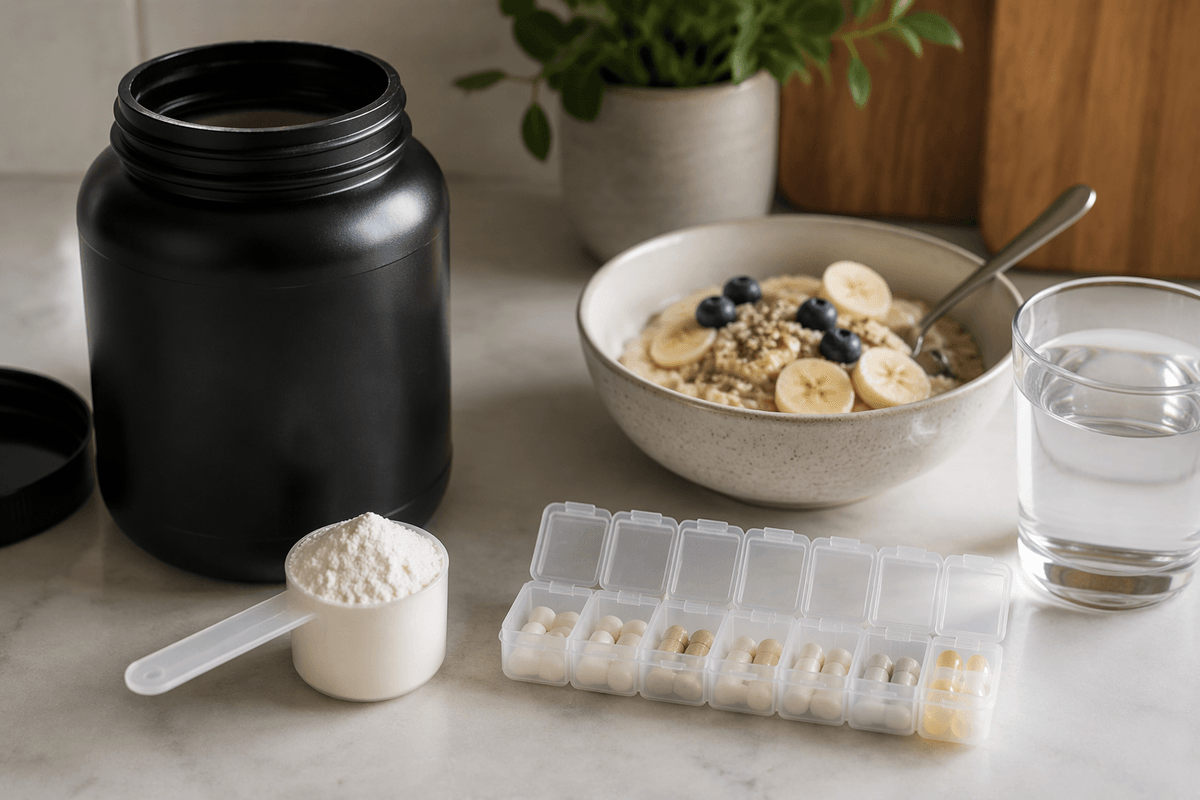
It usually shows up in the least dramatic moment: you’re rushing out the door and realize you already took your scoop twice today—or not at all. That’s where loading can quietly backfire. Higher total grams and multiple doses can feel like “more work,” and if your stomach is touchy, it adds one more reason to skip a day and tell yourself you’ll restart Monday.
Steady dosing tends to survive real life better. One small daily habit fits around breakfast or a post-workout shake, and the lack of immediate feedback can actually make it easier to stick with—no sudden scale jump to overthink, no urgent need to split doses perfectly. The trade-off is psychological: when nothing feels different in week one, people sometimes quit right before the slow ramp would have started paying off.
Either way, the pattern that matters is boring: enough consistent days to let the “bathtub” level rise. The more complicated the plan feels, the more likely the routine breaks for reasons that have nothing to do with whether creatine “works.”
Making sense of progress without over-crediting creatine
One morning you hit a rep PR, and it’s tempting to point straight at the creatine tub like it’s the whole reason. The catch is that the same week you started supplementing, you may also be sleeping a little more, eating a little more, or simply getting better at the lift. Early “wins” are real—but they’re often a pileup of small changes, not a single ingredient suddenly turning things on.
Creatine’s contribution tends to show up as a steadier ability to repeat hard effort: the last set that doesn’t fall apart as quickly, the second exercise that feels less punishing, the workout that’s a touch less fragile when your day isn’t perfect. The water shifts, soreness, and normal training variation can mimic that feeling, so a heavier scale or a bigger pump isn’t a clean performance receipt.
If the pattern continues over a few weeks—more good sessions than “mystery bad” ones—that’s usually when creatine makes the most sense in hindsight. Not as magic, but as a quiet background upgrade you notice most when you stop over-interpreting every day-to-day signal.