Dakhla isn’t hard—pacing it is
At 22:40, I stood by the luggage belt with a damp 9m bag and a coffee that tasted like reheated regret, staring at a map screenshot that made Dakhla look neatly “one straight line south.” The reality was a soft-jawed kind of tired: late arrival, a long transfer, and the small decision of whether to chase the lagoon immediately or just sleep. Even before you kite, pacing starts in the airport.
Dakhla isn’t complicated in the way Marrakech can be; it’s complicated in the way wind and fatigue stack. If you land in the evening and book a dawn-downwinder on day one, you’ll get the “reliable wind” you came for, but you’ll also kite like someone who’s been sitting for ten hours—tight hips, slow reactions, and a higher chance of making dumb mistakes. This is where mid-budget solo riders either thrive (sociable camp dinners, easy partners, consistent sessions) or feel trapped (few non-kite distractions, long distances between “options,” and a town/lagoon split that punishes indecision).
The trade-off to accept early: fewer ambitious plans, more well-timed ones. Two strong lagoon sessions with a long lunch and an early night can beat three rushed days where you’re always “on the way” somewhere. If you’re coming for progression and a safe, chatty scene, build in one low-gear day after arrival and one lighter day midweek—your body will keep the schedule for you anyway.
Pick your base: lagoon or town

At 00:12, half-asleep in a Casablanca airport chair, I opened two tabs: a lagoon camp “all-inclusive” package with a fixed airport shuttle time, and a town hotel that was €40 cheaper but asked me to “arrange taxi on arrival.” The camp’s WhatsApp reply was instant—“driver waits with your name”—while the hotel’s confirmation came with three polite maybes. It wasn’t a luxury choice; it was a friction choice, made while my phone battery slid from 18% to 9%.
If you’re here primarily for wind reliability and a safe, sociable scene, the lagoon-side camps are the low-variance option: you wake up near the launch, you don’t negotiate rides, and you’ll usually find someone for a buddy session or a downwinder seat. The trade-off is price and flexibility—meals at set times, fewer spontaneous town dinners, and you can feel “on-site” by day four if you’re not kiting twice a day. It works best for solo riders who want progression and easy logistics; it’s less satisfying if you need variety when the wind backs off.
Town is the opposite bet: cheaper beds, ATMs, supermarkets, and a bit more normal life, but you pay in commute and timing pressure. A late taxi can cost you the cleanest midday wind window, and splitting days between lagoon sessions and town errands turns into route inefficiency fast. For a seven-day trip, a common compromise is 4–5 nights at the lagoon, then 1–2 in town at the end—easier for souvenirs, cash, and a decompression dinner before flying.
Lagoon days: kitesurfing and calm beaches
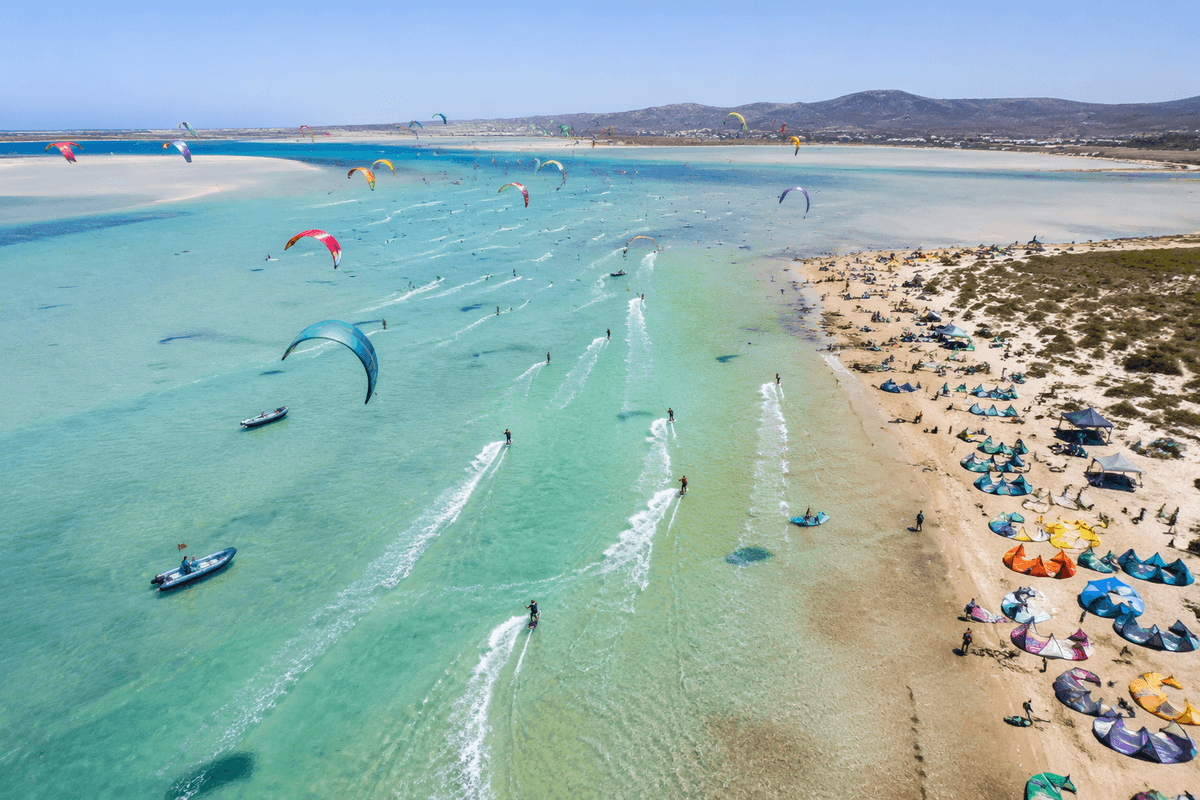
At 10:58, I hovered at the lagoon launch with my 9m half-unrolled, watching a cluster of instructors tighten lines like a pit crew. The wind was already “on,” but the water was flatter than I expected, more training ground than wild-ocean drama. I’d come imagining big empty space; the reality was a narrow corridor of riders, boats, and lessons, and you feel it most when you’re choosing when to go.
The reliable pattern is what makes lagoon days work: late morning builds, early afternoon peaks, then a softer evening that’s better for cruising than pushing new tricks. Compared to open-coast spots, the lagoon’s flat water forgives mistakes and speeds up progression—great if you’re solo and want safe reps—but it can feel busy in peak season, especially near the main camps. The trade-off is simple: book coaching or a downwinder early (limited seats, fixed times), then keep the rest flexible so you can dodge the windiest crowd by shifting 30–60 minutes either side.
For calm beaches, you’re mostly borrowing calm rather than owning it: a windless hour can appear, then vanish, and sunbathing turns into sand-in-everything if you pick the wrong corner. It suits riders who like the rhythm of “session, long lunch, nap, second session,” and it’s less satisfying if you need nightlife or long non-kite afternoons. If your body feels cooked by day three, take the hint—swap one session for a beach walk and an early dinner; the next day’s wind usually shows up whether you’re heroic or not.
Desert escapes: dunes, oysters, hot springs
At 14:30, the camp driver leaned on the horn and pointed at my still-damp harness like it was evidence I was trying to bring the lagoon with me. I hesitated anyway, because leaving a “wind-on” afternoon for a desert detour feels backward when you’ve flown this far. But this is the mental trick of Dakhla: the best non-kite stuff often works precisely because it’s shorter, drier, and timed around the wind rather than competing with it.
The dunes are the cleanest reset, mostly because they’re fast to reach compared to anything that looks “near” on a map. Go when the light is low and your legs are already tired—sunset is forgiving, midday is just heat plus glare—then accept the trade-off: you’ll miss peak wind, but you’ll gain a night where you actually sleep. It works for solo riders who need a social evening (most trips are group-y by default); it’s less satisfying if you’re chasing maximum water time and hate sitting in a car.
Oysters are the surprising middle ground: not a big culinary mission, more a salty, low-effort lunch that breaks up consecutive kite days. This isn’t “wander in whenever,” it’s better when your driver knows the spot and you arrive before the place feels picked over. Hot springs, meanwhile, are either a smart recovery stop or a long, bumpy error depending on your tolerance for discomfort; after two hard sessions, they can feel like a reset button, after a late night they’re just another transfer. If you’re torn, pick one desert outing midweek and keep the rest on standby—wind decides the rest of your schedule anyway.
The first-timer plan that rarely fails
On day two, at 08:15, I caught myself trying to “win” the week: book a downwinder, add a foil lesson, squeeze in oysters, all before my first coffee. The wind was already rattling the palm fronds, and my body still felt like airport seating. I closed the booking page and made a smaller promise: one fixed anchor per day, one deliberate gap.
If you have 5–7 days, the plan that rarely fails is built around reliability, not bravado. Fly via Casablanca if you want frequency and backup options; use a Canary Islands hop when it matches your dates and you can tolerate fewer weekly alternatives. Stay 4–5 nights at a lagoon camp for the low-variance routine (launch access, rescue cover, instant social circle), then shift 1–2 nights to town to handle cash, shopping, and a calmer final evening—cheaper, but with more taxi timing pressure.
Day 0: arrive, sleep, don’t chase a dawn session. Day 1: one coached lagoon session, finish early. Day 2: longer afternoon ride; book a downwinder only if your legs feel normal. Day 3: repeat your best session window and stop before sloppy mistakes. Day 4: desert/oysters at sunset, not midday. Day 5–6: keep flexible—wind peaks can mean crowds, so ride slightly off-peak for cleaner water. If that rhythm sounds soothing rather than limiting, Dakhla is worth the transit; if it sounds like confinement, pick a place with more off-water variety.