Why Komodo’s pink beaches surprise first-timers
The first surprise usually hits before your feet do: from the boat, the beach doesn’t look neon-pink at all. It reads as pale beige—sometimes almost white—until you’re close enough to see the blushy tint along the high-tide line, and even then it changes with clouds, angle, and how wet the sand is. If you arrive expecting a postcard-magenta strip, you can feel briefly underwhelmed; if you arrive expecting a subtle, shifting color that comes and goes with light, it’s immediately more impressive.
The second surprise is how “not just a beach stop” it is. Pink sand in Komodo National Park is usually bundled with a full day of movement: timed entries, a boat schedule that keeps you watching the clock, and a few minutes of chaos when multiple tours land at once. You can absolutely swim and snorkel, but currents and chop can turn “easy float” into “work,” especially later in the day when wind picks up. That’s why first-timers often misjudge the experience: you’re not planning a lazy beach day—you’re choosing a weather window and a boat rhythm, and the pink sand is the reward for getting both mostly right.
Pick your base: Labuan Bajo vs liveaboard
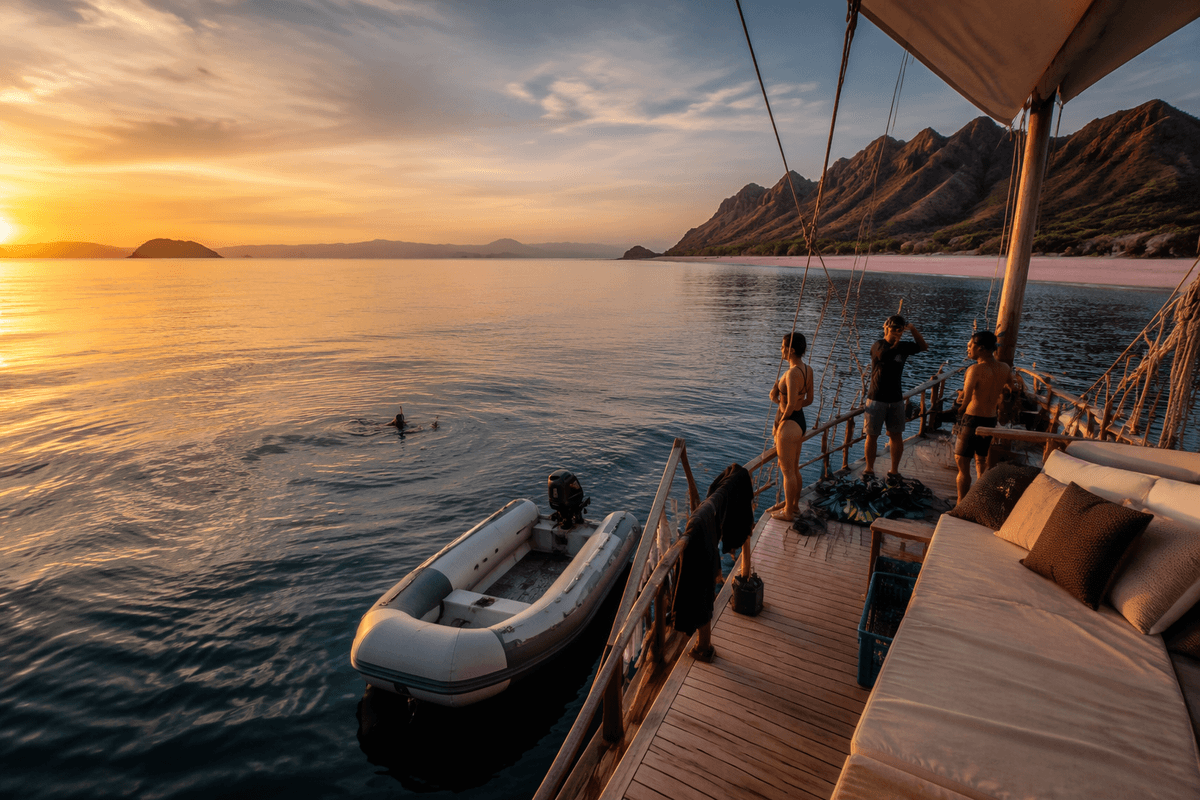
I hesitated right at the booking screen: lock in three nights on a boat and hope the sea behaves, or keep a bed in Labuan Bajo and accept early alarms plus a long commute across the water. For a first trip, that choice matters more than which “pink beach” you pick, because it decides how much time you’ll actually spend ashore versus bouncing between docks, tenders, and photo stops.
Labuan Bajo as a base works best if you have 4–6 days and want flexibility: you can choose a clear-weather day for a speedboat day trip, swap days if wind kicks up, and still have proper showers and decent food at night. The friction is the rhythm—most tours leave early, the harbor can be chaotic, and the “cheap” boats often feel crowded once you’re sharing one small beach with five other groups.
A liveaboard (phinisi or faster modern boats) buys you sunrise timing and fewer frantic dock transitions; you can reach Pink Beach earlier or later when it’s calmer, and snorkeling feels less rushed. But you’re committing: cabins vary wildly, seasickness risk is real, and if conditions turn rough, you can’t simply retreat to town—you’re already out there, paying for the full itinerary whether you love every stop or not.
Best pink-beach stops and what each offers
The decision usually lands on the boat deck: your guide says “Pink Beach,” but you need to ask which one—because the experience changes a lot depending on where you’re actually anchoring and how many other itineraries are converging at the same time. I’ve had a “perfect” pink-sand moment ruined by a late arrival and choppy water, and a “less famous” stop feel ideal simply because we were there first and left before the wind rose.
Pink Beach (Komodo Island) is the classic, and it earns that status for a reason: the sand blush is easiest to spot along the upper shoreline, and the nearshore snorkeling can be lively when visibility cooperates. The catch is traffic—day-trip speedboats often stack up mid-morning, and the swim can go from relaxing to tiring if the current’s pulling parallel to shore. If you’re not a confident swimmer, this is where you want fins and a guide who’s actually watching the water, not just taking drone shots.
Pink Beach (Padar side / “Long Pink Beach” as some tours market it) tends to feel more spacious, which matters when you’re trying to get five calm minutes instead of twenty people in every frame. It can be more exposed, though; on windier days the water gets textured fast, and snorkeling turns into effort. If your plan also includes the Padar viewpoint, pairing it with this stop can save transit time—unless your operator insists on the same crowded sequence everyone else runs.
Permits, park fees, tours, and boat logistics
My first real “wait, what?” moment wasn’t the sea—it was the fee stack. Komodo National Park entry is rarely a single line item; depending on the day and what you do, you can get hit with separate charges for entrance, ranger/guide, and sometimes snorkeling or other activity-related add-ons. Most tours say “includes fees,” but that can mean “we’ll collect cash on the boat and pay at the post,” which works fine until you realize you brought only small bills or assumed card would be accepted. If your operator can’t name exactly what’s included (and what isn’t), budget a little extra and keep cash accessible, not buried in your dry bag.
On logistics, the boat type decides your stress level. A speedboat day trip from Labuan Bajo is the cleanest math if you’re short on days: earlier departure, faster crossings, and you’re back in town if wind picks up—though it’s also the most “on the clock,” and you’ll feel it when multiple boats land at once. A phinisi liveaboard spreads the transit out and can time Pink Beach when it’s calmer, but you’re paying for comfort that varies wildly by cabin, and rough water becomes your problem overnight, not just for an hour.
Whatever you book, ask for the actual sequence (not just the list of stops), the departure pier and check-in time, and whether you’ll transfer by tender onto shore—those little shuffles are where time leaks. I also look for one practical safety signal: do they mention currents and provide fins/life jackets without you negotiating for them? If they brush that off, it usually means the “permit/fee” part is organized, but the water part is left to luck.
When to go: seasons, seas, and crowds
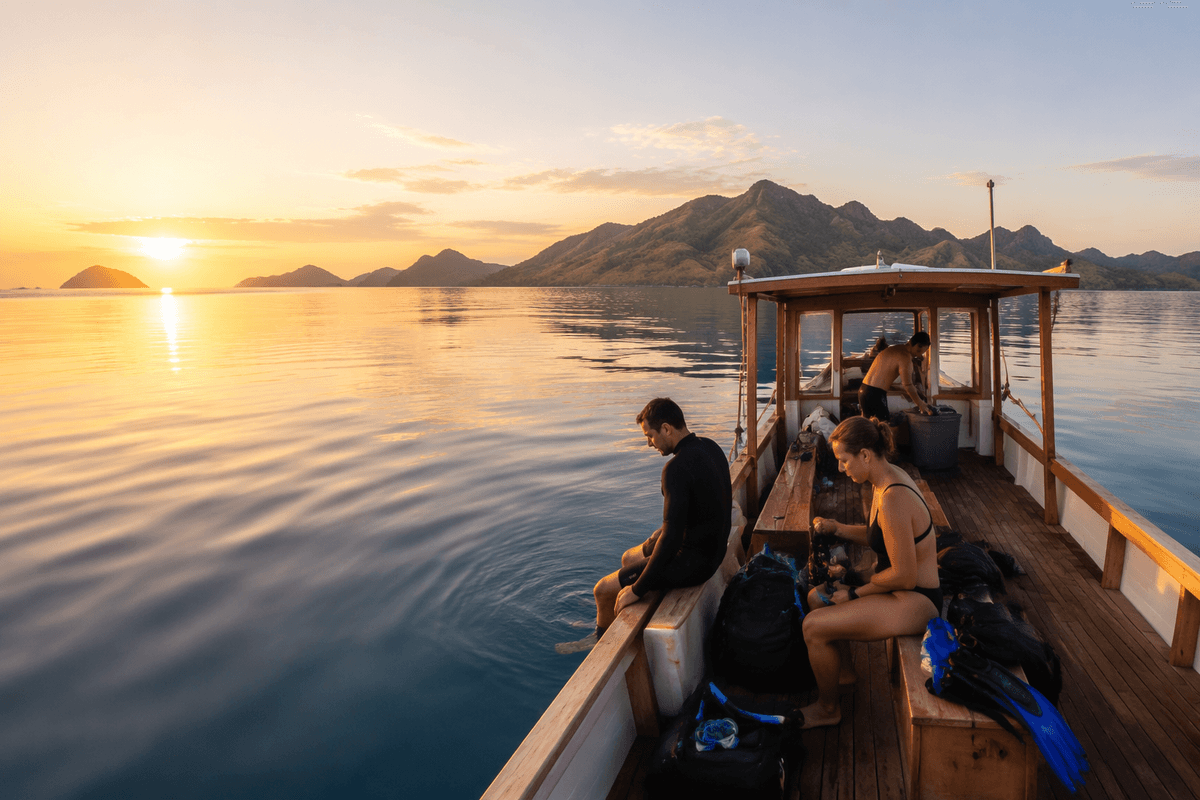
I only understood Komodo timing the morning our captain pushed the departure earlier because “the wind comes up after lunch.” It sounded like superstition until the sea texture changed almost on schedule: smooth crossings at dawn, then a louder, slappier ride that made snorkeling feel like work instead of play. If you’re picking dates, you’re really picking your tolerance for motion and murky water as much as your chance at that subtle pink shoreline.
In general, the calmer window is the dry season (roughly April–October), when crossings are more predictable and visibility is usually better—but it’s also when boats pack the same headline stops. July and August can feel especially compressed: more tours, more timed landings, and fewer “quiet” photos unless you arrive early or late. Shoulder months can be the sweet spot if you have 4–6 days in Labuan Bajo and can swap your boat day based on wind; liveaboards don’t get that flexibility once you’ve cast off.
Rainy season (roughly November–March) isn’t an automatic no, but you’re gambling on chop, downpours, and last-minute itinerary changes. That can be fine if you’re prioritizing fewer crowds and can tolerate a bumped Pink Beach day—less fine if this is your one must-do and you hate uncertainty.
What to pack and safety on remote shores
I learned the hard way that the “beach bag” you’d bring in Bali is the wrong mental model here—Komodo’s pink-beach stops are short, salty, and often involve a wet tender hop where anything loose gets splashed. A small dry bag (or at least a waterproof phone pouch) matters more than a cute tote, because once you’re on shore there’s rarely a place to stash valuables that stays dry. Footwear is another quiet limiter: some landings are pebbly or coral-rubbly, and thin flip-flops can turn a five-minute wander into a careful, slow shuffle.
For water time, I’d prioritize fins and a rash guard over extra clothes. Fins make currents feel manageable instead of draining, and a rash guard solves two problems at once: sunburn on reflective sand and stings/scrapes when you’re climbing back onto the boat ladder. If your operator “has life jackets” but doesn’t actively offer them, ask early—before the first snorkel stop—because the gear pile disappears fast on crowded day trips.
Safety-wise, treat every pink beach as a current beach. If the guide points out a drift direction, believe them; if nobody says anything, do a quick check yourself (watch floating debris or bubbles) and stay close enough that the boat crew is actually watching you, not filming. Also: there may be no shade and no freshwater rinse, so electrolyte tabs and a basic blister kit feel boring until you’re two stops in and still wet, sandy, and tired.
Making the most of pink sand, then heading back
The moment you step onto the sand, it’s tempting to sprint for the “pinkest” strip and burn your whole stop chasing color. What worked better for me was giving it two minutes: look at the high-tide line, notice how the blush shows more when the sand is damp, then decide whether you’re here for a photo, a swim, or a quick snorkel—because you rarely have time for all three without feeling rushed.
If the water is calm, I’d snorkel first and sit on the beach after; once wind picks up, getting in starts to feel like work, and you’ll resent wasting the easy window. If it’s already choppy, stay conservative: float close, keep the boat in easy reach, and don’t treat “short stop” as a dare. This is also where a rash guard and fins quietly pay for themselves, especially when fatigue sneaks up mid-afternoon.
Heading back, the cleanest decision cue is simple: if you want flexibility, keep Labuan Bajo nights and pick your best-weather day; if you want better timing and less dock friction, commit to a liveaboard and accept you’re buying whatever conditions you get.
![Revolut <18 vs. GoHenry [Which Card is Better?]](static/image/2026/07/27/c4c57026-ec22-4205-ab23-bb45d5fbc986.png)