Why fiber needs feel different at every age
It can start as a small shift you only notice on a workday afternoon: lunch felt “fine,” but an hour later you’re grazing again, and your bathroom routine is less predictable than it used to be. Nothing dramatic—just a pattern that seems easier to trigger now with a couple of meetings, a rushed sandwich, and whatever snack is closest.
Fiber needs can feel different at every age because the body’s margin for error shrinks. Stress, sleep, and long sitting can slow gut movement, and that interacts with the kind of carbs you’re relying on. Refined grains and packaged snacks digest quickly, so they don’t add much bulk or feed the gut bacteria that help keep things moving and comfortable.
Meanwhile, as checkups start to matter more, the “quiet jobs” fiber does—helping you feel satisfied after meals and smoothing how sugars and fats are handled—become more noticeable when they’re missing. It may feel like your metabolism changed overnight, when the bigger change was what gradually disappeared: beans, whole grains, fruit, and vegetables showing up often enough.
What “enough fiber” looks like by age
You might notice it most when you switch brands—one “whole grain” bread keeps you steady through the afternoon, another leaves you scanning for something crunchy by 3 p.m. That’s often what “enough fiber” looks like in real life: not a perfect number, but meals that have enough bulk to slow things down and make your usual routine feel smoother.
Most adults still land in the same general target range, but it can feel harder to reach as your day gets more packaged and desk-bound. The common guideline is about 25 grams per day for women and about 38 grams per day for men, with a later-life target that’s a bit lower (around 21 grams for women and 30 grams for men after about age 50). When your baseline is more white flour, snack bars, and “light” meals, those numbers can look surprisingly far away.
And it’s not only about digestion. If fiber is consistently low, it may show up as less lasting fullness, more frequent snacking, and “numbers” that drift at checkups—small changes that are easy to blame on age, even when the pattern is mostly about what stopped making it onto the plate.
Signs you’re under-target without realizing it
It often shows up as a “normal” week: a couple of days without going, then a day that feels urgent, then back to guessing. Because nothing hurts, it’s easy to chalk it up to travel, stress, or sitting too long. But when stools get smaller, drier, or harder to pass more often than you expect, that can be a quiet sign there isn’t enough bulk moving through.
Another clue is how quickly food seems to disappear. If breakfast buys you an hour, lunch doesn’t carry you, and you’re picking at snacks that never quite satisfy, it may not be willpower—it may be that the meal was mostly fast-digesting starch. Fiber slows the exit of food from the stomach and gives gut bacteria something to work on, which tends to make fullness feel steadier.
Then there are the “numbers.” If weight creeps up despite similar portions, or cholesterol and fasting glucose drift at checkups, a long-term fiber gap can be part of the background—especially when most carbs are white flour, crackers, or bars instead of beans, oats, fruit, and vegetables.
When “healthy eating” still ends up low-fiber
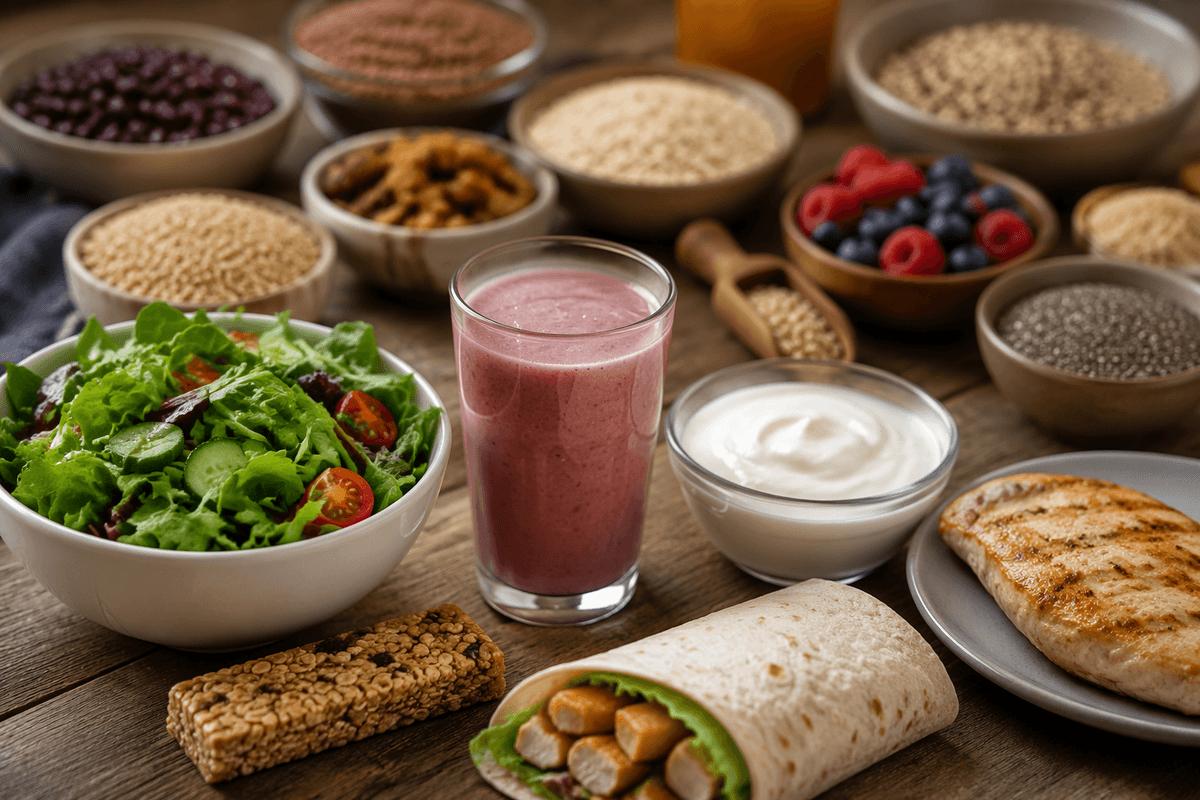
It can be confusing when the grocery cart looks “responsible,” yet your body still feels a little stalled. The salad kit, the rotisserie chicken, the yogurt, the handful of nuts—none of it is junk. But by the end of the day, the parts that reliably add bulk may still be missing, and the signal is subtle: you’re full right after eating, then oddly snacky later.
A lot of modern “healthy” routines quietly prioritize protein and low calories, not fiber. A wrap labeled whole grain can still be mostly refined flour. Smoothies can lose fiber if they’re mostly juice, and snack bars often read like grains but act more like quick carbs. Even a salad can be low-fiber if it’s mostly greens plus chicken, with no beans, lentils, or hearty grains to slow digestion.
Over time, that lighter, faster-digesting pattern may leave less for gut bacteria to work with and less bulk to keep things predictable—easy to miss until your routine (and your checkup trends) starts feeling less forgiving.
The hidden trade-offs between fiber sources
You can feel it when the “right” snack doesn’t land the way you expected—an apple keeps you steady, but a fiber bar leaves you a little bloated and still hunting for something else. On paper they both add grams, yet your body may treat them differently, especially when you’re eating on a schedule and sitting most of the day.
Different fiber sources come with different trade-offs. Beans and oats tend to bring soluble fiber that thickens in the gut, which can make meals feel more filling and may nudge cholesterol trends in a better direction over time. Wheat bran and some whole grains add more insoluble bulk, which can help stool move along, but can also feel rougher if you’re already a bit backed up or under-hydrated.
Then there’s “added fiber” in shakes, cereals, and bars. It can help close a gap, but it doesn’t always come with the water, minerals, and plant compounds you get from intact foods—so the number can rise while comfort and regularity stay inconsistent.
Why increasing fiber can backfire at first

The first time you try to “fix it,” it can feel like your gut argues back. You add a high-fiber cereal, swap in a bean bowl, grab a bar with added fiber—and instead of feeling lighter, you feel puffy, gassy, or oddly backed up. It’s easy to decide fiber “doesn’t agree with you,” especially when the discomfort shows up the same day.
Often, it’s not the fiber itself as much as the speed of the change. Gut bacteria adjust to what they’re regularly fed; when more fermentable fiber shows up suddenly, they can produce more gas while that ecosystem shifts. At the same time, fiber holds water and adds bulk. If your usual meals were low-fiber and low-fluid, adding bulk without enough moisture can make stools feel heavier and harder to move, particularly with long stretches of sitting.
That’s why a quick jump in grams can backfire even when the long-term direction is helpful. The early days can feel worse before they feel steadier—and the “right” move on paper can look like the wrong one in your body.
Making sense of your own fiber pattern
You notice it when you replay a “normal” day: coffee, a grab-and-go breakfast, something quick at lunch, then a stretch of sitting where you’re not hungry exactly—just restless. The misunderstanding is thinking you need a dramatic overhaul, when the pattern is often a few low-fiber defaults repeating so consistently that they stop registering.
One way to make sense of it is to look for where bulk should have shown up and didn’t. Refined grains tend to vanish quickly, so hunger returns sooner and snacks feel oddly unsatisfying. When meals lack beans, oats, vegetables, or fruit, there’s less gel-forming fiber to slow digestion and less roughage to keep stool volume steady—so your bathroom routine and your appetite can both get noisier.
The day-to-day signals aren’t perfectly reliable. Travel, stress, and hydration can blur the picture. But if the same couple of meals reliably precede smaller stools, more snacking, or drifting checkup “numbers,” it’s often less about age as a surprise and more about a routine that quietly thinned out.