The real trip is how you react
The first time a gate agent said “canceled” and my phone started lighting up with hotel check-in messages, I felt that familiar urge to sprint in five directions at once. That’s the moment that decides your trip—not the museum ticket you booked months ago, not the perfect dinner reservation.
With a tight 9-day itinerary, you can’t “solve everything,” and pretending you can is how you lose time and money. The real skill is reacting on purpose: pick one next move, do it cleanly, and accept that something small will slip. When you can stay calm enough to choose, you stop chasing sunk costs and start protecting what actually keeps the trip on track.
Pause, breathe, and name the problem
I’ve learned to buy myself a tiny pocket of time right then—before I start tapping refresh like it’s going to fix anything. I step out of the boarding scrum, put my bag down, take one slow breath in and a longer one out, and decide that I’m not solving “the whole trip” in the next 30 seconds. That pause sounds soft, but it’s what keeps me from rebooking the first expensive option I see just to make the discomfort stop.
Then I name the problem in one sentence, out loud if I can: “I’m not getting to Chicago tonight, and my first hotel night is at risk.” Not “everything is ruined,” not “the airline hates me.” A clean sentence tells you what’s actually broken—flight, lodging, connection, timing—and it stops you from chasing ten tabs that don’t matter. If you can’t say it simply, you’re probably mixing two problems (like a cancellation and a non-refundable tour) and you’ll make a messy decision.
My quick trick is to write three bullets in Notes: what happened, what I need next, and what deadline matters (check-in cutoff, last train, tour start). It works well because it turns panic into inputs. The limitation: you may have only a few minutes before hold times spike or seats disappear—so this reset is short on purpose, not a meditation retreat.
Triage: safety, money, then schedule
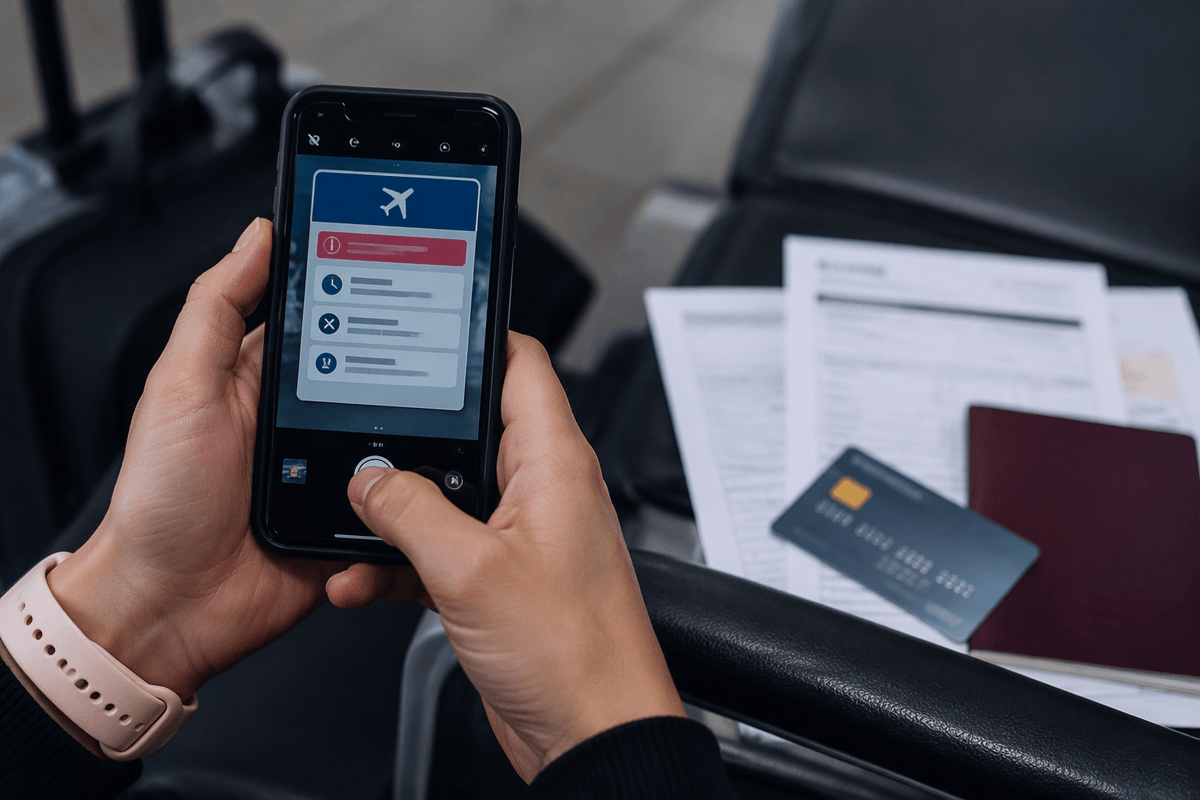
The moment I’ve named the problem, I triage in a fixed order—because if I don’t, I’ll waste precious minutes “saving the itinerary” while ignoring the part that can actually hurt me. First: safety. That means where I’m physically going to be for the next 6–12 hours, and whether I can stay there without getting stranded. If it’s late, the airport is thinning out, and the last train is about to stop running, I stop optimizing and get somewhere secure: well-lit hotel, official taxi stand, or an airport hotel shuttle. What doesn’t work is trying to tough it out on a dead phone battery or assuming “I’ll figure it out after this next call.”
Second: money. Not the whole budget—just the leaks. I check what will auto-charge or expire first: hotel no-show windows, prepaid tours with strict cutoffs, change fees, and whether my travel card benefits cover delay lodging. This is where sunk-cost thinking bites: paying $80 to keep a non-refundable $400 booking alive can be smart; paying $400 more to “protect” a day that’s already gone usually isn’t. I take screenshots of delays/cancellations while they’re still visible, because later the proof gets weirdly hard to retrieve.
Third: schedule. Only after I’m safe and the money bleeding is contained do I rebuild the timeline—what’s still possible tomorrow, what needs a message now, and what can slide. The trade-off is emotional: you’re choosing “on track enough” over “exactly as planned,” but that choice is what keeps the remaining eight days intact.
Handle people and paperwork calmly
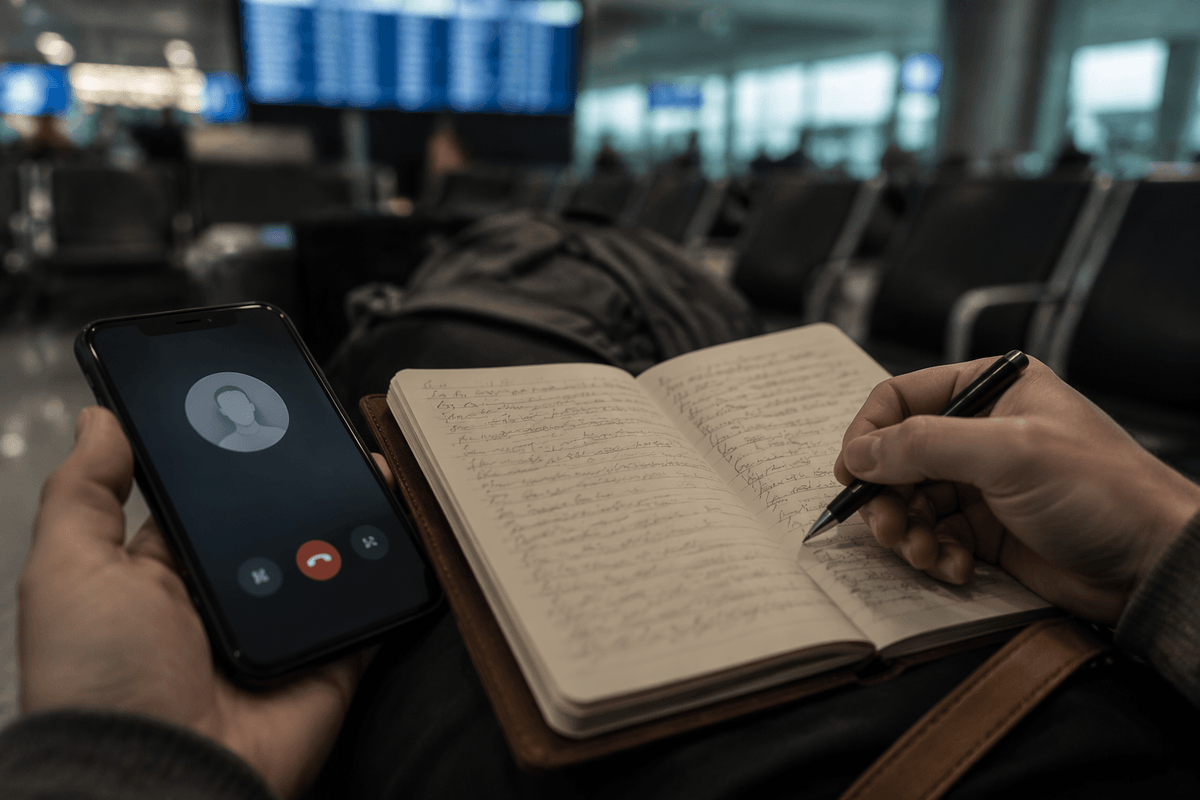
The part that spikes my stress isn’t the reroute—it’s the human bottleneck. You’ve got an airline rep, a hotel front desk, maybe a tour operator, and every one of them can either help you fast or trap you in a circular policy conversation. I try to pick one channel per company and stay there: airline app or phone or desk, not all three. What works well is walking up with a single ask: “Can you rebook me to arrive by tomorrow noon, any routing, carry-on only.” What doesn’t work is telling the whole story from birth; it burns your place in line and invites a “sorry, nothing we can do” dead-end.
Paperwork is where calm pays you back later. While I’m waiting—on hold, in a queue, whatever—I build a tiny evidence packet: screenshots of the cancellation notice, boarding pass, bag tag, and any “delay reason” text; then I save receipts in one album (taxi, hotel, meals). The constraint is you’re often doing this on 12% battery in a loud terminal, so I keep it brutally simple: photo, timestamp, done. If a hotel is at risk of marking you a no-show, I message before the cutoff with one line: “Delayed due to cancelled flight; arriving tomorrow; can you hold reservation or shift first night?” Clear, polite, and specific beats desperate and long.
Finally, I write down names and promises. Not because I’m gearing up for a fight—because memory gets unreliable when you’re tired. “Spoke to Maya at 9:18 p.m., offered waiver if I submit receipts.” If you do need to escalate later, that one sentence turns chaos into a trackable process—and lets you get back to being on vacation instead of running a claims department.
My 15-minute reset when chaos hits
The moment I feel myself spiraling—three apps open, a half-written email to the hotel, and that itchy urge to “just book something”—I start a timer for 15 minutes. Not to be zen, but to stop making expensive, irreversible clicks while my brain is in fight-or-flight.
Minutes 0–3: I change my physical setup. I step out of the crowd, sit where I can plug in, and get water. If I can’t get power, I go into low-power mode and turn off Wi‑Fi scanning; the constraint is simple: a dead phone turns every option into a gamble. Minutes 3–7: I write a three-line brief in Notes: “What broke / What must happen next / The next deadline.” Minutes 7–12: I pick one action that protects money today—message the hotel before the no-show window, cancel the backup room before the free-cancel cutoff, or grab a screenshot of the cancellation while it still shows.
Minutes 12–15: I choose the next conversation and script the first sentence. One channel, one ask. Then I hit send or get in line—no more browsing “maybe better” routes. The takeaway: this reset doesn’t fix the disruption; it prevents the second disaster, which is you paying extra to soothe panic and waking up behind schedule anyway.