Why guava’s nutrient density matters in real diets
You notice it halfway through the afternoon: the snack was “fine,” but your energy still dips and you’re looking for something else an hour later. It’s rarely about willpower. A lot of quick options are light on fiber and minerals, so they don’t slow digestion much or leave you feeling steadily fueled.
Guava tends to work differently in real-life snacking because it packs several things into one simple choice. The fiber can help the fruit feel more “staying” in your stomach, which may translate to fewer rebound cravings. Vitamin C and other antioxidants add a protective layer that isn’t easy to get from refined snacks, even when calories match.
And then there’s potassium: if your day leans salty—sandwiches, soups, takeout—your body may feel a bit more puffy or “off.” Guava’s potassium can support a better sodium–potassium balance, though results aren’t perfectly consistent day to day. It’s not a fix, but it can be a steadier baseline.
Immune support that starts with oxidative stress control
Sometimes it’s not a sore throat that gets your attention—it’s that “run down” feeling after a string of late lunches and snack-bar dinners. People often chalk that up to sleep alone, but the food pattern matters too. When most quick snacks are refined and low in protective nutrients, your body may spend more time managing everyday oxidative stress, which can leave you feeling less resilient.
Guava is useful here because its vitamin C comes packaged with other antioxidants, not in isolation. In practical terms, that mix may help neutralize some of the wear-and-tear signals that rise with busy weeks, hard workouts, or just constant grazing on processed foods. It doesn’t make you “immune,” and you won’t feel it like caffeine—but over time, the steadier intake of these compounds can support the background work your immune system relies on.
One guava on Tuesday won’t undo a month of takeout. But as a repeatable snack, it can be a small way to keep your baseline from sliding.
Fiber effects on digestion and bowel regularity
You only realize it when you’re rushing out the door: you feel “full,” but not satisfied—almost heavy—and the bathroom routine has been unpredictable. A lot of people interpret that as needing more coffee or skipping breakfast, when it’s often a simpler pattern: days built on refined snacks tend to be low in fiber, so stool bulk and water-holding don’t stay very consistent.
Guava’s fiber can shift that experience in a practical way. Fiber helps slow how quickly food moves and mixes through the gut, and it gives intestinal bacteria something to work with. For some people, that shows up as easier, more regular bowel movements and fewer urgent swings between “nothing happening” and sudden loose stools. It may also help a snack feel like it has a longer tail—less grazing an hour later—because digestion doesn’t sprint.
The fiber doesn’t behave the same in every body. If you’re not used to it, adding guava on top of an already rushed day can mean extra gas or cramping at first, especially if fluids are low. When that happens, it’s not that guava is “bad”—it’s that the gut is adjusting to a different workload.
Blood sugar steadiness through slower carbohydrate handling

It’s the “clean” snack that surprises people: you eat something fruity, feel a quick lift, and then—too soon—you’re scanning the kitchen again. Many assume that’s just how fruit works. More often, it’s about how fast the carbohydrate is handled when there isn’t much fiber to slow the exit from your stomach.
Guava tends to be steadier because its fiber creates a bit of drag on digestion. That slower pace can mean glucose enters the bloodstream more gradually, which may translate to fewer sharp peaks and fewer abrupt “crash” moments afterward. In day-to-day terms, it can feel less like a spike of energy and more like a snack that holds you through the next meeting.
Portion size, what you ate earlier, and whether you’re pairing it with a very sweet drink or a refined snack can all overpower that steadiness. If the pattern continues—good intentions, but repeated dips—it may be less about the guava and more about the overall snack rhythm.
Heart support via lipids, pressure, and inflammation
You notice it later in the day, not as “heart health” exactly, but as how your body feels after a salty lunch—tight rings, thirst that doesn’t quite resolve, a vague sense of being a little off. It’s easy to blame water intake alone, yet the snack pattern matters too. When most grab-and-go options are low in potassium and high in sodium, the balance can drift, and some people feel that drift as puffiness or a heavier, more sluggish afternoon.
Guava quietly pushes that balance the other way. Its potassium supports the sodium–potassium relationship your body uses to manage fluid and vessel tone, which is one reason it’s often framed as “pressure-friendly.” The fiber adds a separate angle: when snacks are more fiber-poor, people tend to lean harder on refined carbs and fats, and that combination can nudge lipid patterns in the wrong direction over time. Guava doesn’t override a fast-food week, but it can make the default snack less working-against-you.
And then there’s inflammation—the low-level kind that rides along with highly processed eating and repeated glucose swings. Guava’s vitamin C and antioxidants may help reduce some of that oxidative strain, though you won’t feel a dramatic switch overnight. It’s more like a small reduction in background noise, assuming it shows up often enough to matter.
Skin and collagen support beyond “more vitamin C”
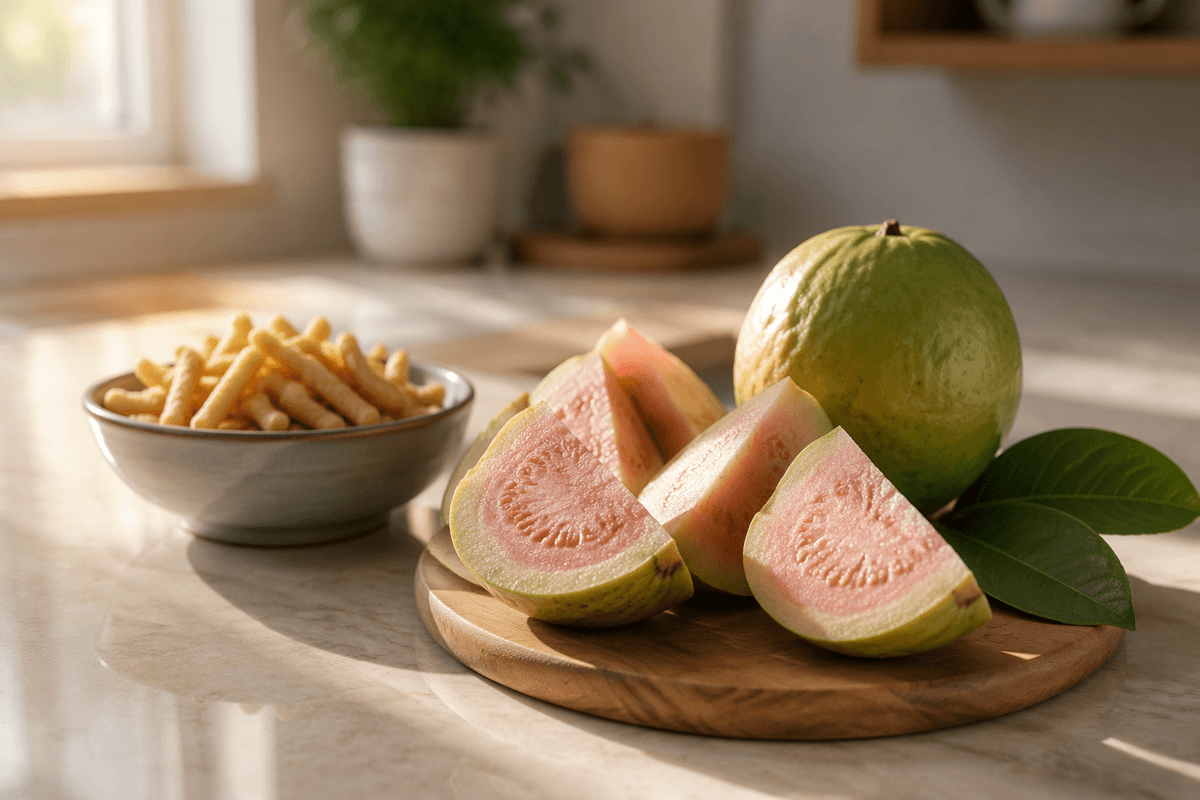
You see it in the mirror on the mornings after a salty dinner and a short night: skin looks a little dull, and a fine line seems louder than it did last week. Most people reach for a supplement and assume it’s a “more vitamin C” problem. But in real life it’s often a pattern issue—processed snacks tend to crowd out the mix of nutrients that help skin handle everyday wear.
Guava’s vitamin C matters, but it’s not working alone. Collagen maintenance depends on steady building blocks and a calmer oxidative environment, and guava’s antioxidants may help take some pressure off that system. When your day is full of glucose swings, that oxidative stress can run higher, and skin can end up looking less resilient even if you’re using good products.
You might notice steadier “bounce” over weeks, not days—and if guava replaces a refined snack rather than just adding extra sugar to the day.
When “healthy” guava backfires for some people
It usually shows up as a small surprise: you pick guava because it feels like the “safe” snack, and then your stomach feels tight, gassy, or a little too active on a day you can’t afford distractions. That’s not your body rejecting something healthy as much as it is reacting to a bigger fiber load than it’s used to, especially if you’re dehydrated or eating it quickly between meetings.
Another common misunderstanding is blaming the fruit when the pattern is really the portion and timing. Guava can steady carbohydrate handling for many people, but if it’s stacked on top of a sweet drink, or eaten after a long stretch without food, it may still feel like a quick rise and fall. In that situation, the “backfire” isn’t guava being unhealthy—it’s that your snack rhythm is doing most of the work.
And for some, the seeds and texture are simply a bad fit when the gut is already sensitive. If you notice a repeatable pattern of discomfort, it’s a useful data point—not a failure—because the best snack is the one you can tolerate often enough to matter.






![Revolut <18 vs. GoHenry [Which Card is Better?]](static/image/2026/07/27/c4c57026-ec22-4205-ab23-bb45d5fbc986.png)