It’s not the spot, it’s access
I paused with my finger hovering over a pin on my phone map—“tortoises here,” “blue-footed boobies there”—while the Wi‑Fi in Puerto Ayora sputtered and the café clock slid past 6:20 p.m. The spot looked perfect in screenshots, but the fine print was louder: landing sites aren’t “walk up,” they’re scheduled. Even the same beach can feel like two different places depending on whether you arrive at 8 a.m. with soft light or at noon with glare and a line of snorkel fins.
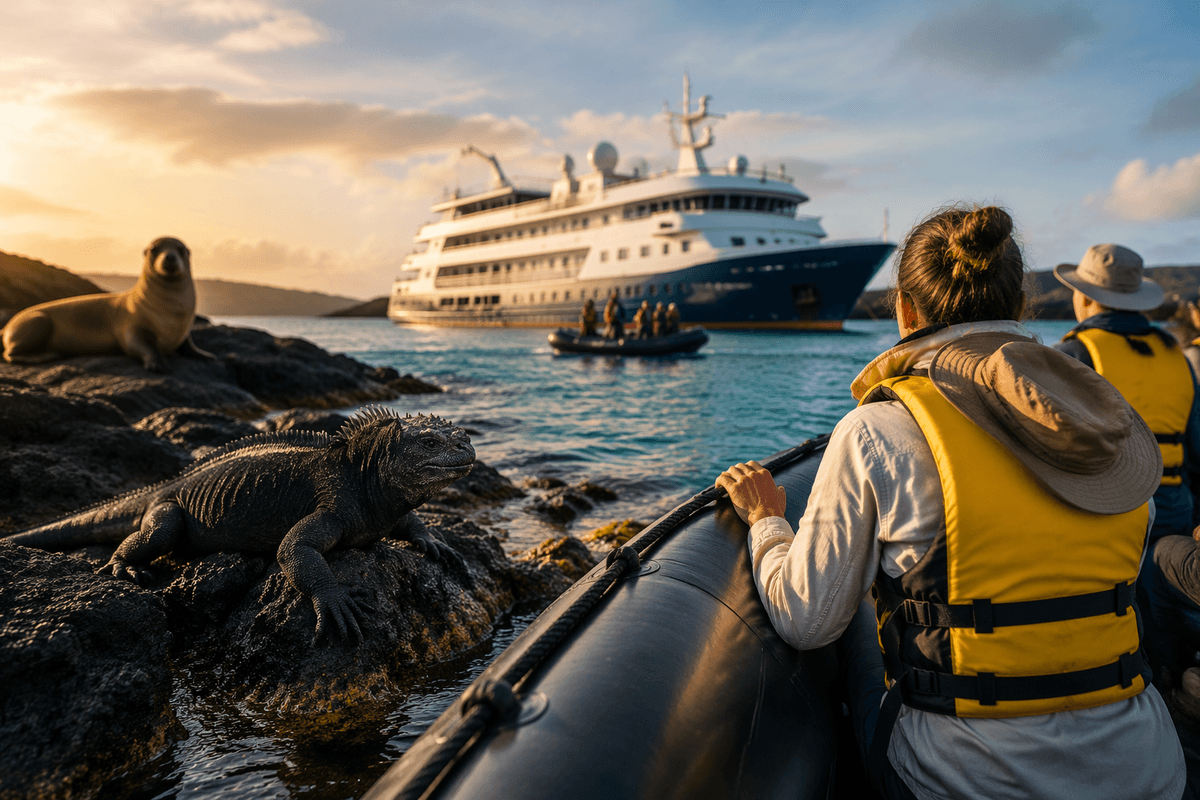
In the Galápagos, the real question isn’t “where’s the best photo,” it’s “what itinerary can legally put me there, at what hour, with what rules.” Cruises get access to more visitor sites and tighter timing (good for dawn behavior, bad if you get seasick or hate living by a bell). Land-based stays buy you a real bed and flexible evenings, but day tours are a lottery of availability, longer boat rides, and mid-morning arrivals that can flatten contrast—fine for documentary shots, tougher for feather detail and clean backgrounds.
For a 7-day trip with limited PTO, I’d treat access like your shot list’s gatekeeper: ask which islands are on which permits, whether landings are wet or dry (salt spray changes your lens discipline), and how many groups cycle through a trail. The no-drone reality is a trade-off too—less aerial drama, more incentive to nail behavior with a single telephoto and patience. If you can choose only one “icon,” pick the plan that puts you there when the animals are awake, not when the boat finally docks.
Close wildlife: Española and Genovesa
I hesitated on the dock in Puerto Baquerizo Moreno with a dry bag half-zipped and a 100–400mm already fogging from the humidity. The day-tour crew kept repeating “Española” like it was one clean promise, but the reality was two landings with two completely different photo problems: Gardner Bay’s bright sand and backlit sea lions versus Punta Suárez’s darker lava and wind that turns birds into kites. You don’t really choose “the island” so much as the hour your group is assigned to each trail.
Española is the close-up behavior pick when your week is tight: boobies courting at your feet, marine iguanas stacked like cordwood, and, in season, waved albatross that don’t seem to notice a telephoto pointed at them. The trade-off is timing pressure—most land-based tours arrive after the softest light, and the paths can feel like a slow-moving conveyor belt of tripods. It works best for patient shooters who can accept busy backgrounds and wait for cleaner moments between groups.
Genovesa is the opposite bargain: fewer people, more “how is this real” proximity—red-footed boobies in shrubs, frigatebirds inflating like balloons, owls tucked into shade—but it’s often cruise-only and the crossings can be choppy enough to cost you a morning if you’re prone to seasickness. If your shot list is heavy on birds-in-flight, Genovesa earns the discomfort; if you want guaranteed land time with simpler logistics, Española is the safer bet.
Volcanic drama: Isabela and Bartolomé
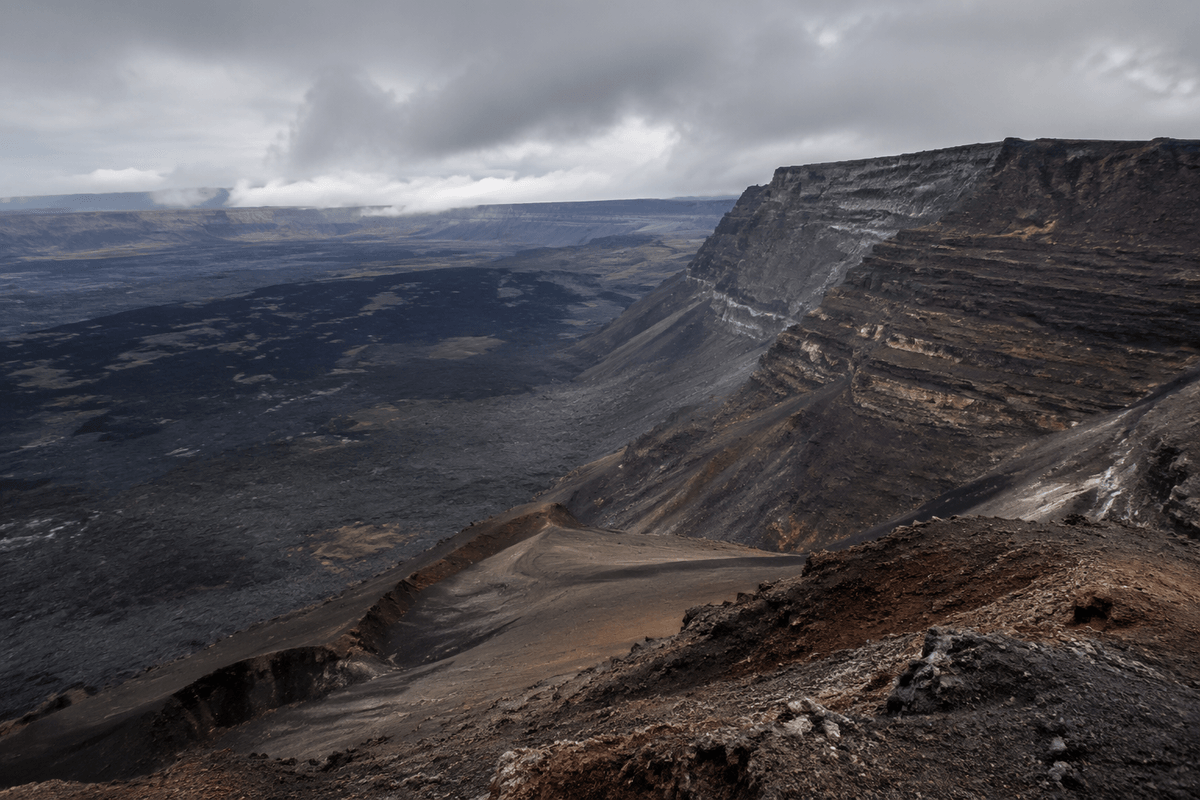
The boat agent slid a laminated schedule across the counter and tapped “Bartolomé” with a pen, like it was a checkbox. On my map it looked close to Santa Cruz; on the water it’s a pre-dawn wake-up and a long, bouncy ride that can leave you shooting Pinnacle Rock with tired legs and a salty front element. The staircase climb is short but steeper than it reads in photos, and the best frames happen fast once you hit the viewpoint.
Bartolomé is the “wide lens earns its keep” day: black-and-rust lava fields, teal bays, and that clean, graphic horizon line that feels almost too designed. The limitation is crowd flow—groups bunch at the top, so you trade patience for clean foregrounds, and mid-morning sun can bleach the water unless you lean into higher-contrast, more abstract compositions. If your shot list is landscape-heavy, it’s worth building around; if you’re chasing intimate behavior, it can feel like a scenic detour.
Isabela pays off differently, and usually only if you give it at least an overnight. Sierra Negra’s caldera and the lava fields are pure texture, but the timing is a trade-off: cloud and drizzle can soften contrast (great for detail), while clear skies can turn the hike into a bright, exposed slog. Around the coast—Tintoreras or, if you can book it, Los Túneles—tide and swell decide whether your day is calm reflections or a wet, inefficient scramble that rewards a sealed bag and a flexible plan.
Sea lions and towns: San Cristóbal
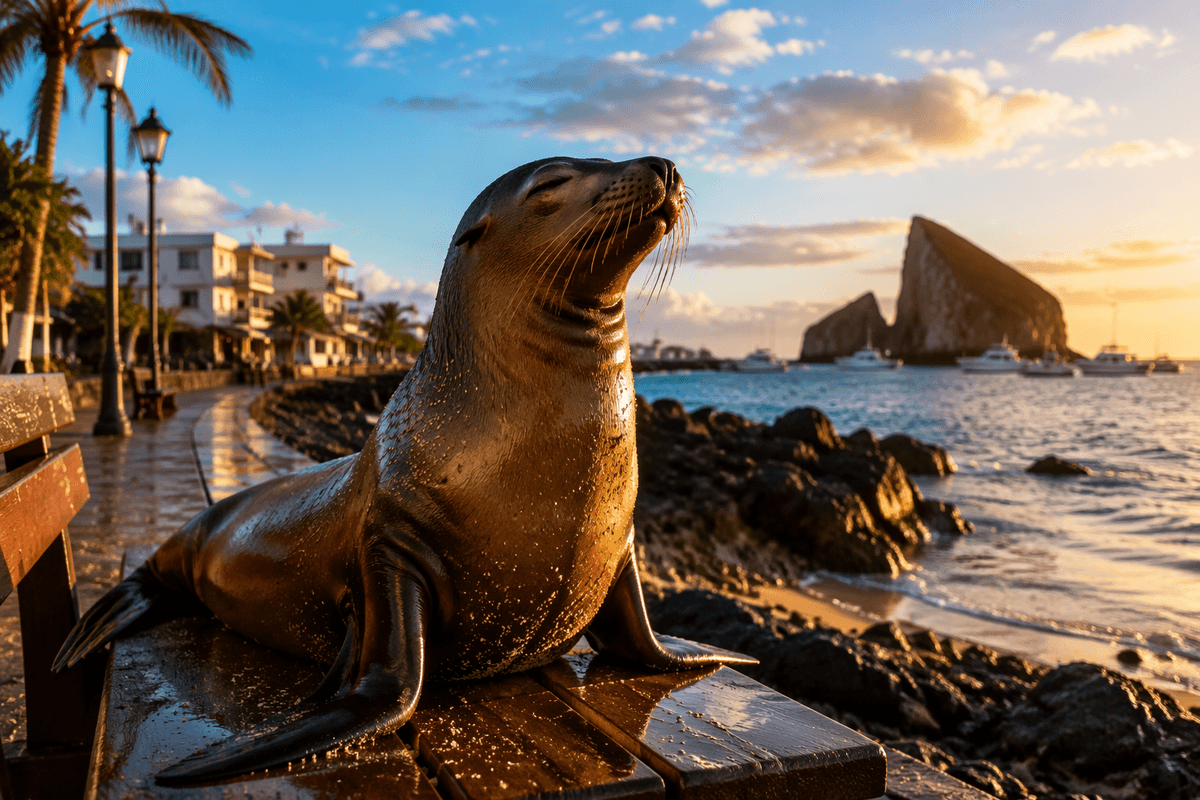
I stopped short on the boardwalk in Puerto Baquerizo Moreno when a sea lion hauled itself onto a bench like it owned the place, whiskers beaded with water and sand stuck to its chest. It was 7:05 a.m., the light still soft, and a jogger had to detour around it without breaking stride. Compared with the “remote beach” vision people sell you, San Cristóbal’s wildlife can feel almost urban—closer, louder, and a little less curated.
That town-wildlife overlap is the whole advantage if you’re land-based and short on PTO: you can shoot sea lion behavior before breakfast, swap cards over coffee, then walk to Playa Mann for calmer compositions as the day warms up. The trade-off is control—backgrounds include kayaks, seawalls, and curious onlookers, and midday glare turns wet fur into blown highlights fast. It works best for photographers who like documentary energy and can frame tight with a telephoto to erase the human mess; if you crave empty, pristine scenes, it can feel distractingly busy.
For more “wild beach” texture without a full logistics leap, La Lobería is the easy win, but timing matters: arrive early or late and you’ll get cleaner sand, fewer snorkel groups, and more relaxed interactions. I kept my lens hood on and my bag zipped—salt spray and sea lion “sneezes” are real—and leaned into low angles when the animals dozed. If your week needs one island that lets you practice patience in short, repeatable sessions, San Cristóbal is the one that behaves like a home base.
Underwater icons: Kicker and Gordon Rocks
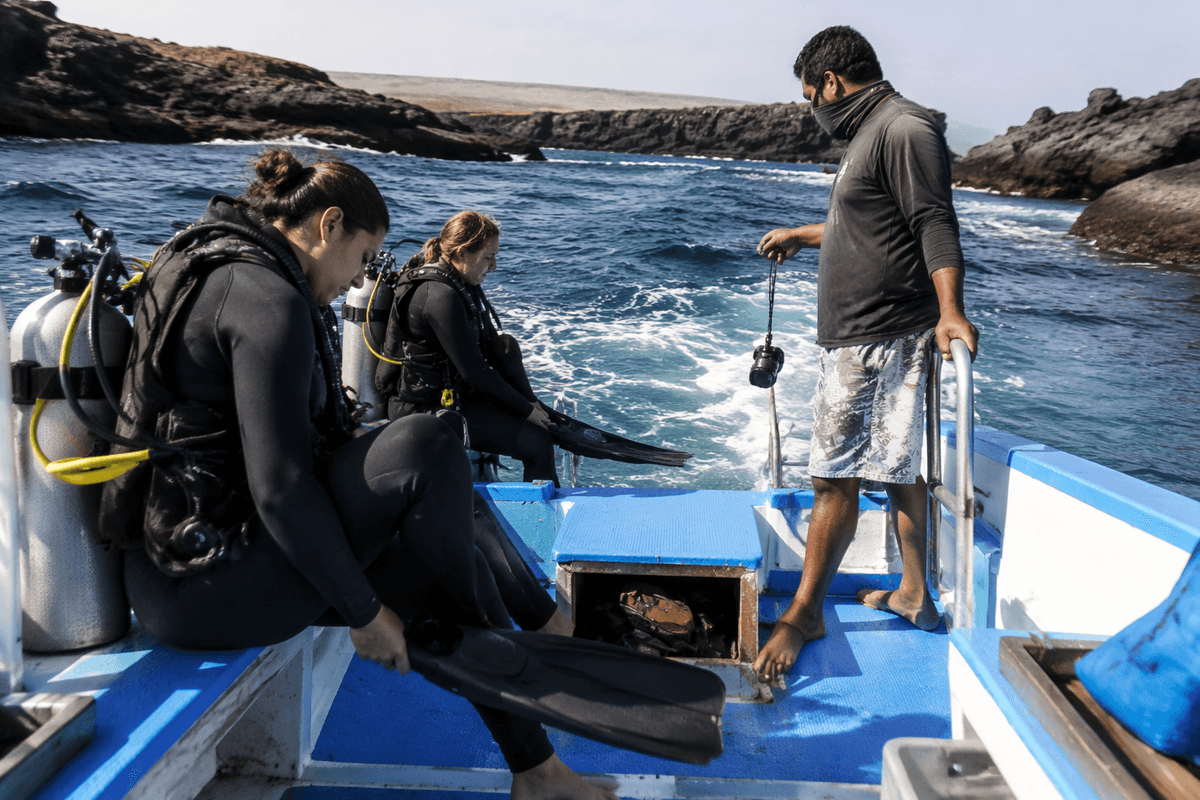
I stood on the stern bench with my fins half on, watching the guide point at Kicker Rock like it was a simple swim. The water looked calm from the panga, but the channel between the tuffs was already pulling sideways, and my mask strap felt suddenly too loose. With one hand on the ladder and the other on my camera lanyard, I realized the “iconic” shot here is less about bravery than timing your entry with the group.
Kicker (off San Cristóbal) is the photogenic one above and below: clean silhouettes at the split, sea turtles cruising through blue, and—if you’re lucky—hammerheads that stay just close enough to prove they exist. The limitation is that it’s often a snorkel-first site; you’re fighting surge, bubbles, and a moving subject while trying to keep salt off a mirrorless housing. It works best for shooters comfortable with wide-angle and imperfect passes; if you need repeated, controllable behavior, it can feel like one long missed opportunity.
Gordon Rocks (usually from Santa Cruz) is the trade-up: stronger current, deeper drops, more “real dive” energy, and a higher chance of big animal encounters—but it’s less forgiving if you’re new to current diving or prone to fatigue. Day tours can be booking-sensitive, and the best moments aren’t evenly spaced; you might wait, finning into flow, then get a 20-second window that rewards a simple setup and fast shutter decisions. If your week can only handle one high-commitment water day, choose the one your body will still enjoy on day six.
My ideal route by trip length
I stared at two browser tabs at 11:48 p.m.—a “7D/6N central islands” cruise that looked perfect on paper, and a land-based plan with three separate day tours that all said “limited spots.” The cruise wanted a same-night deposit; the day tours wanted exact dates I still didn’t fully trust. That’s when it hit me: your route isn’t really geography, it’s what can be booked to happen at the right hour.
If you’ve only got 4–5 days on the ground, I’d stay put on San Cristóbal and shoot repeatable sea lion behavior at dawn, then spend one “big-energy” day on Kicker Rock if conditions and your comfort level line up. It’s less variety than island-hopping, but it trades boat fatigue for more attempts at clean light and calmer hands—better if you’re trying to come home with a few nailed frames instead of a scattered gallery.
For 7 days, my ideal is a split base: 3 nights San Cristóbal (town wildlife + Kicker) and 3–4 nights Santa Cruz with one committed landscape day (Bartolomé) and one choose-your-adventure day depending on bookings—Española for close behavior or a water day like Gordon Rocks if you dive and can handle current. If you’ve got 9–10+ days, that’s when Isabela becomes worth the travel time and tide roulette. Pick the version where you’ll still have patience on day six; the animals don’t pose faster because your PTO is ending.

![Revolut <18 vs. GoHenry [Which Card is Better?]](static/image/2026/07/27/c4c57026-ec22-4205-ab23-bb45d5fbc986.png)