Tea’s gentle reputation hides common mixing mistakes
The cup looks harmless—warm, familiar, almost “light”—until you realize you’ve been building the same add-ins into it every day without counting them as anything. A spoon of honey here, a splash of creamer there, maybe a flavored syrup that feels smaller than a snack. But later, the pattern shows up as a hollow kind of hunger an hour after lunch, or a midafternoon restlessness that doesn’t match how calm tea is supposed to feel.
Part of the mismatch is that tea isn’t just flavored water. Caffeine can land sharper when it’s paired with quick sugar, and tannins can make a cup feel more “empty” in the stomach for some people—so the sweetness or creamy texture can mask how stimulating it still is. When the add-ins become routine, it may start to feel like tea is causing cravings or sleep trouble, when it’s often the combination doing it.
It also gets confusing because the effects aren’t consistent. One day it’s fine, the next day the same mug feels jittery, acidic, or oddly unsatisfying—especially if you’re drinking it faster at work, or using tea as a stand-in for a real break. That’s usually where the gentle reputation trips people up: the drink stays the same, but the “little extras” quietly change what it does.
Essential oils turn a cozy cup into a irritant
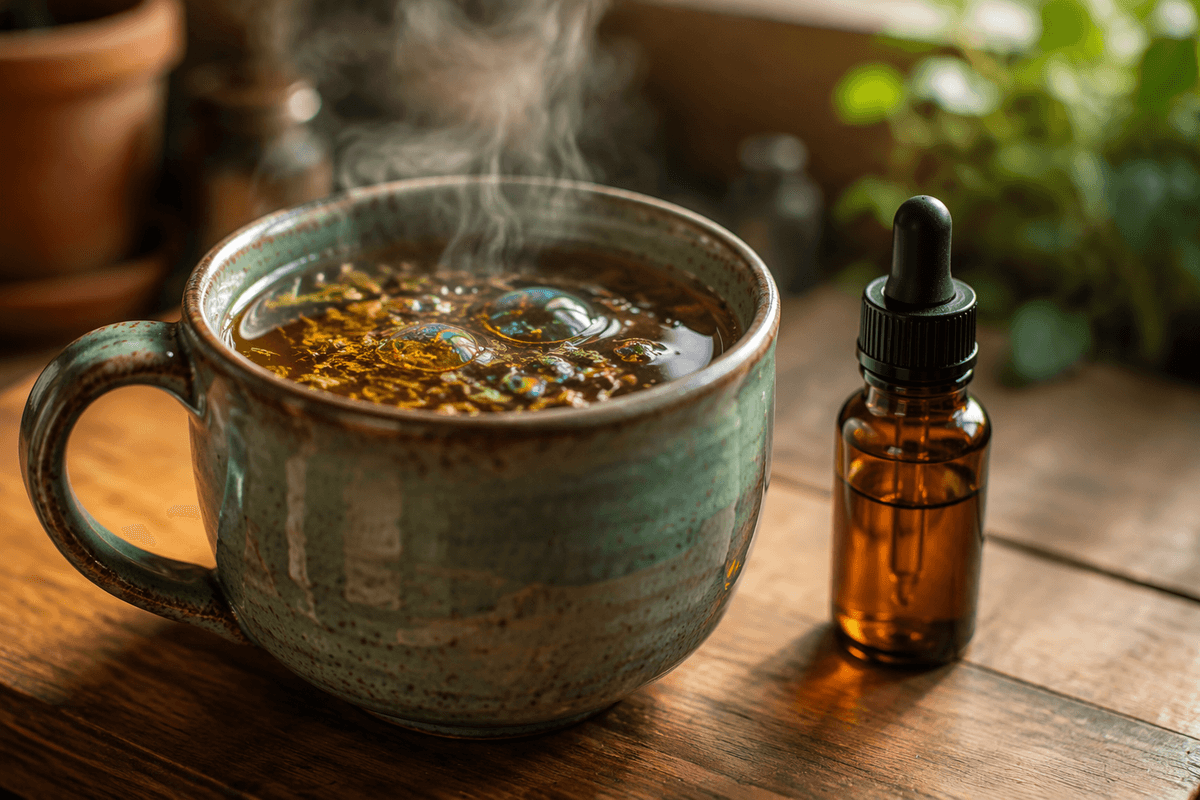
You notice it first in the throat—a faint scratchiness that wasn’t there yesterday—right after you add a couple drops of “natural” flavor. Peppermint, lemon, lavender: it smells clean and comforting, so it’s easy to assume it will behave like the dried herb. But essential oils are concentrated extracts, and in a hot drink they can feel surprisingly sharp.
In some situations, the irritation is mechanical as much as chemical. Oils don’t truly blend into water, so tiny slicks can sit on top and hit the mouth, esophagus, or stomach in a more direct way than a tea infusion would. Heat can also intensify the sensation, making it easier to mistake the burn for “stronger tea,” when it’s really the add-in changing how the cup lands.
The confusing part is inconsistency. A drop might feel fine in a large mug, then feel harsh in a smaller, stronger brew—or on a day you drink it quickly between meetings. If the pattern continues, it can start to look like tea is suddenly causing reflux or a dry cough, when it may be the concentrated oil doing most of the pushing.
Apple cider vinegar can amplify burn and reflux
The first hint is often a warm, rising sting that shows up a few minutes after the last sip—especially if you’d been chasing “brighter flavor” with a splash of apple cider vinegar. In the mug it can seem harmless, even cleansing, because the aroma reads as food. But in a hot drink, that extra acid can feel louder than you expected.
Tea already has its own edge: tannins can feel a little astringent, and caffeine can nudge the stomach toward making more acid in some people. When vinegar is layered on top, the total “bite” goes up, and the back of the throat may start to notice—more burping, a sour taste, or that familiar refluxy pressure that wasn’t there with plain tea.
It’s also one of those add-ins that behaves differently depending on the day. If you drink quickly, on an emptier stomach, or after a heavier lunch, the same amount can feel fine one time and sharp the next, making it easy to blame the tea instead of the combo.
Alcohol changes how tea feels and lands

It’s easy to miss the shift until you stand up: the tea still tastes like tea, but the body feels a little “tilted.” A splash of whiskey in a hot mug or a pour of liqueur into iced tea can read as a treat, yet it often changes the after-feel more than the flavor. Some people notice a quicker warm flush, a softer sense of alertness, then a strange slump that doesn’t match the size of the drink.
Part of the confusion is that alcohol and tea can pull in opposite directions at the same time. Tea’s caffeine can keep the mind “on” while alcohol blunts the body’s signals, so you may drink faster, eat less, or miss early fullness. Alcohol can also relax the valve that helps keep stomach contents down, and paired with tea’s acidity and tannins, that can make burning or throat-backup more likely on certain days.
The pattern rarely looks dramatic—more like uneven sleep, early-morning dryness, or waking up hungry after what felt like a light nightcap. When that shows up, it can seem like tea suddenly stopped being gentle, when it may be the added alcohol changing where the cup lands.
Protein powders and collagen clash with hot tannins
The first clue is usually the texture: your tea goes a little cloudy, a few soft clumps ride the surface, and the drink feels thicker than you expected. In the moment it reads as “more filling,” especially if you’re trying to turn a mug into a quick breakfast. Then an hour later, you might notice a heavy fullness without real satisfaction—or the opposite, a strange return of hunger that doesn’t match how much you just drank.
Hot tea isn’t a neutral mixing bowl. Tannins in black and green tea can bind to proteins, and heat can make some powders seize up, so what you’re sipping isn’t always as smooth or usable as it looks. The result can feel like mild stomach effort: more burping, a coating feeling in the throat, or a slightly unsettled gut that comes and goes depending on how strong the tea is and how fast you drink it.
Collagen often seems gentler than a full protein scoop, but the same mismatch can show up in smaller ways—an oddly “dry” finish, a tighter stomach, or a cup that replaces a snack and then backfires into late-morning cravings. When that pattern repeats, it can look like tea suddenly got harsher, when it may be the hot tannins changing how the added protein lands.
Sugar alcohol sweeteners often trigger gut turbulence
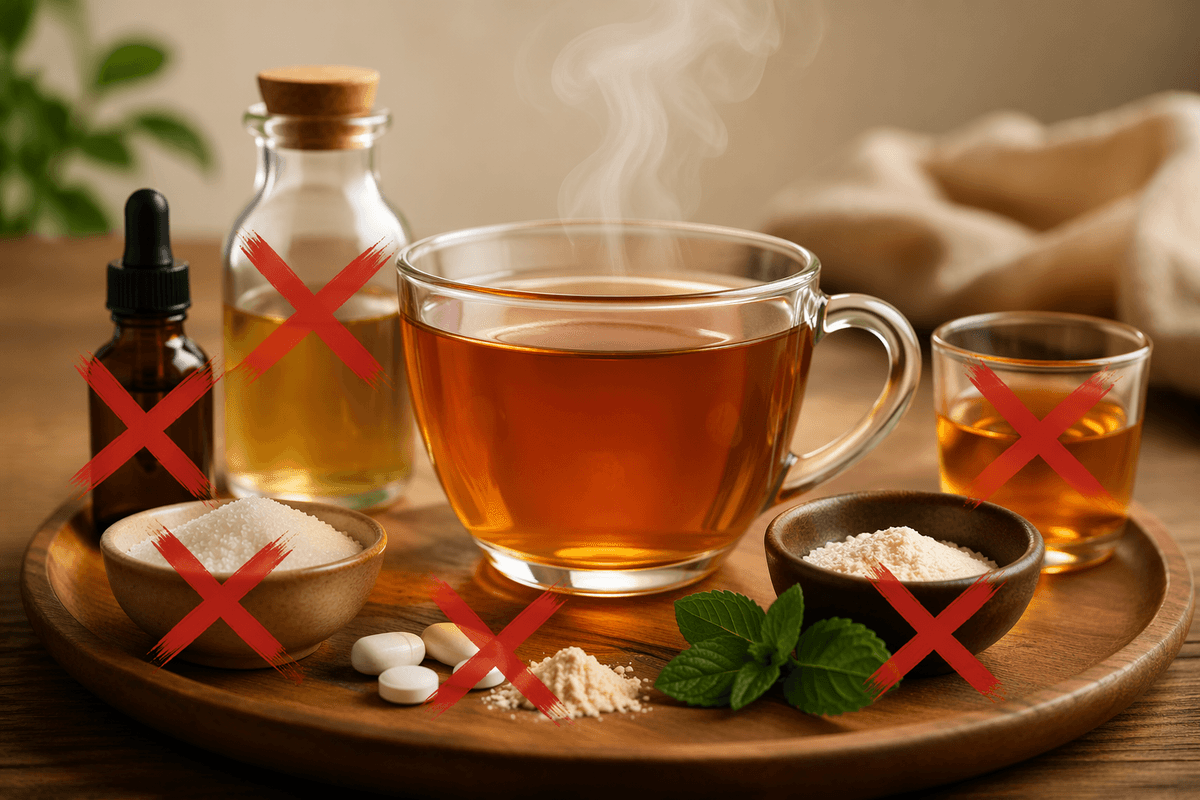
You stir in a packet, take a sip, and it tastes “clean”—sweet enough, but without that sticky sugar finish. Then, a little later, your stomach starts to feel noisy. It might be a vague ballooning pressure, extra gurgling, or a sudden need to use the restroom that doesn’t match how small the add-in seemed. Because the tea itself feels gentle, it’s easy to blame the temperature, the caffeine, or “something you ate earlier,” and miss the new variable.
Sugar alcohols (often in “zero sugar” sweeteners) don’t always get absorbed the way regular sugar does. In some people, they pull water into the gut and end up feeding fermentation farther down, which can translate into gas, urgency, or crampy discomfort. Hot tea can make the timing feel tighter—sipped quickly, on an emptier stomach, or alongside a rushed morning—so the reaction feels like it came from the tea, when it may be the sweetener doing most of the work.
The tricky part is inconsistency. A small amount might be fine at home, then show up at work when you refill a larger mug, stack packets across the day, or pair the tea with a “light” lunch. Over time, that can create a pattern of unpredictable digestion that seems random—until you notice it clusters around the cups sweetened with sugar alcohols.
Mixing supplements into tea invites interactions and surprises
Halfway through the mug, you realize the “boost” you stirred in has a taste of its own—chalky, metallic, or oddly bitter—and the tea suddenly feels less soothing. A dropper of tincture, a capsule opened into the cup, a powdered “calm” blend: it’s easy to treat them like flavorings. But tea has caffeine, tannins, and a natural bite that can change how those extras feel once they hit an emptier stomach or a faster workday pace.
Some supplements are simply easier on the body with food, and tea doesn’t count the way a snack does. When they’re taken in a hot, tannic drink, they may feel harsher—more throat scratch, mild nausea, or that unsettled “too much, too fast” sensation. And because tea can speed things along for some people, the timing can get confusing: the supplement seems to “kick in” quickly, then fades into jitteriness, heartburn, or a late-morning hunger that wasn’t there on plain tea days.
The tricky part is how normal it looks from the outside. You’re still just drinking tea—yet the pattern shifts when the mug becomes the delivery system. If the same add-in keeps lining up with sharper alertness, lighter sleep, or a stomach that feels touchy, it may be the pairing, not the tea, that’s creating the surprise.
A clearer rule: compatibility beats “healthy” intentions
Some days the same tea tastes “clean,” yet your body answers like it was a snack, and an experiment all at once. You might feel pleasantly steady after one mug, then oddly hungry after the next—despite using the same “healthy” add-ins you trust. That’s usually the tell: intention stays constant, but compatibility doesn’t.
Tea has its own active edges—caffeine that can feel sharper with sweeteners, tannins that can dry the mouth and bind to certain ingredients, and heat that makes acids and oils hit more directly. When you stack extras, you’re not just changing flavor; you’re changing speed, intensity, and where the cup lands in the gut. The result can be jittery calm, reflux that comes and goes, or a “light” meal that doesn’t hold.
A practical rule is to watch outcomes instead of labels. If one add-in reliably pairs with throat burn, restless sleep, or afternoon cravings, it may not be “bad”—just a poor match for tea in your routine. The cup doesn’t have to be perfect; it just has to feel predictable.