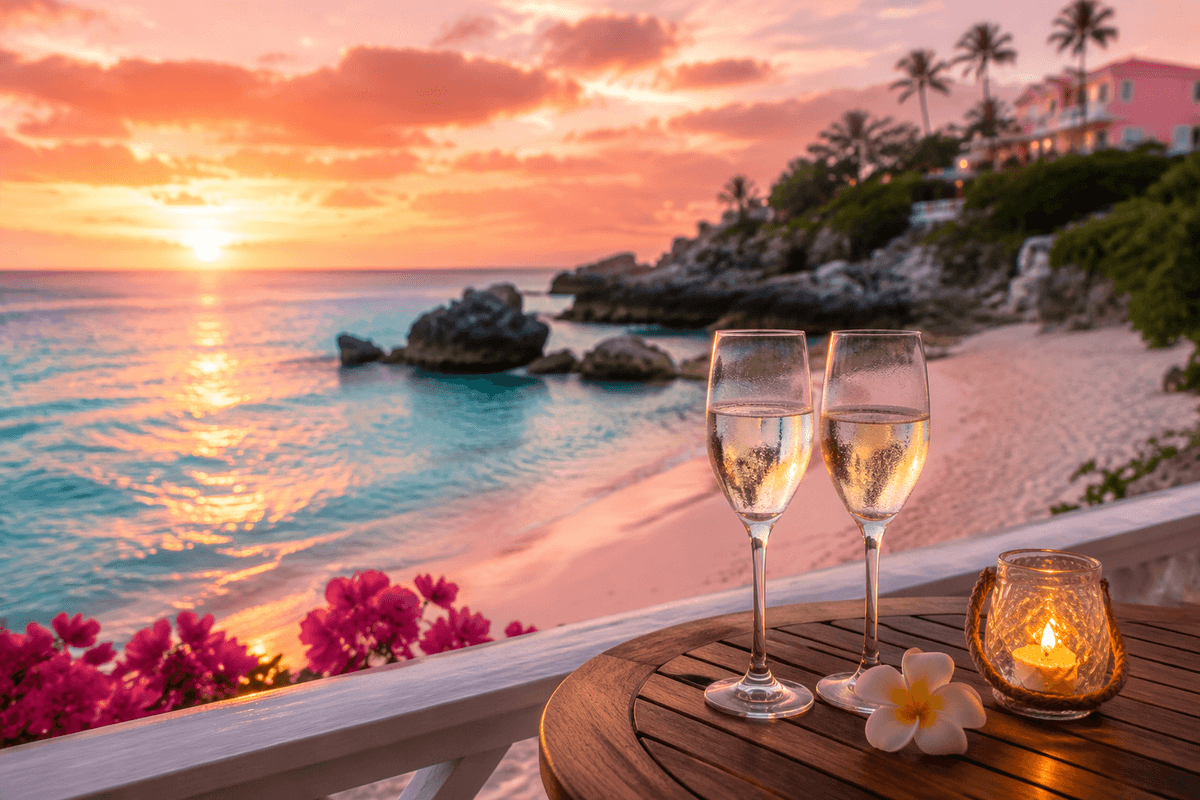
Why Biarritz gets missed—and why it shouldn’t
The moment you start comparing flights, Biarritz can slip through the cracks: it’s not “classic” South of France like Nice, and it doesn’t have San Sebastián’s instant food-city pull, so it looks like a compromise stop rather than a main event.
But that’s exactly why it works for a 4–6 day break. You get a walkable town where surf culture sits right next to old-money seaside hotels, and you can switch from a beach morning to pintxos-style grazing without feeling you’ve chosen either elegance or energy. The catch is reliability: the Atlantic can turn grey and windy fast, and in peak summer prices climb hard—yet the payoff is a place that feels lived-in, not staged, with enough variety that a half-day of bad weather doesn’t wreck the trip.
What Biarritz feels like: surf, elegance, Basque energy
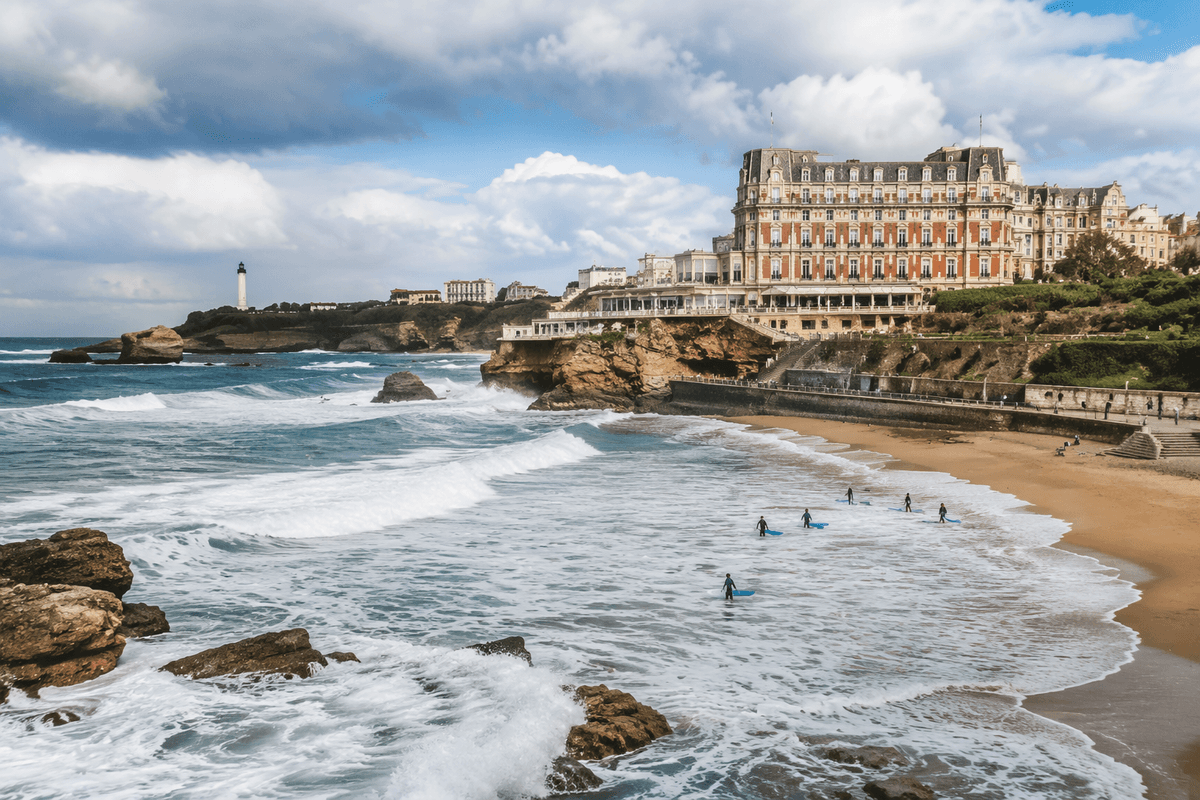
On our first morning, the town didn’t “open” politely the way the Côte d’Azur can—Biarritz starts with salt, wind, and wetsuits. You’ll see boards tucked under arms on the same streets as people heading for coffee in smart shoes, and it somehow doesn’t clash. If you’re picturing Nice’s neat promenade rhythm, this feels looser and louder, with the Atlantic doing whatever it wants; it’s energising when the weather behaves, and mildly annoying when it’s spitting sideways.
The elegance is real, but it’s not precious. Grande hotels and Belle Époque touches sit a few minutes from beaches where beginners wobble through whitewater, and that contrast is basically the point of staying here rather than just day-tripping. It also means your day can split cleanly: a surf lesson or cliff walk when the light’s good, then a shift into aperitif mode without having to “change towns” to change vibe.
Basque energy shows up most when you eat. Even if you’re not crossing into San Sebastián, there’s a pintxos-adjacent way of grazing and sharing that feels more social than the Riviera’s sit-down formality—though in July and August you’ll need to accept queues, or eat earlier than you’d normally bother.
Top sights and experiences worth your limited time
We hesitated on the Rocher de la Vierge because it looked like the sort of “must-see” that’s actually just a photo stop—until we realised how quickly it resets your bearings. The walk out on the footbridge is short, free, and properly dramatic when the swell is up, but it’s also exposed: if the wind is doing its Atlantic thing, you’ll spend more time bracing than lingering. Pair it with a loop past the old port (Port des Pêcheurs) for a grounded counterpoint—small boats, tight little harbour walls, and a sense of Biarritz that isn’t trying to be glamorous.
If you’ve only got one beach decision to make, choose between Grande Plage for classic central convenience (and crowds) or Côte des Basques for the surf-town feeling (and a bit more walking plus tide timing). Côte des Basques is the one that makes Biarritz feel distinct from Nice: less polished, more elemental, but you do need to check the tide—at high tide the usable sand shrinks fast, and your “lazy beach afternoon” can turn into a perched-on-the-wall situation.
When the weather turns, don’t force another windy promenade. Duck into the Musée de la Mer (aquarium) or commit to a long lunch with Basque flavours—both work best midweek or earlier in the day, because weekend pacing and school-holiday queues can chew through the time you thought you had.
When to go: seasons, crowds, and surf conditions
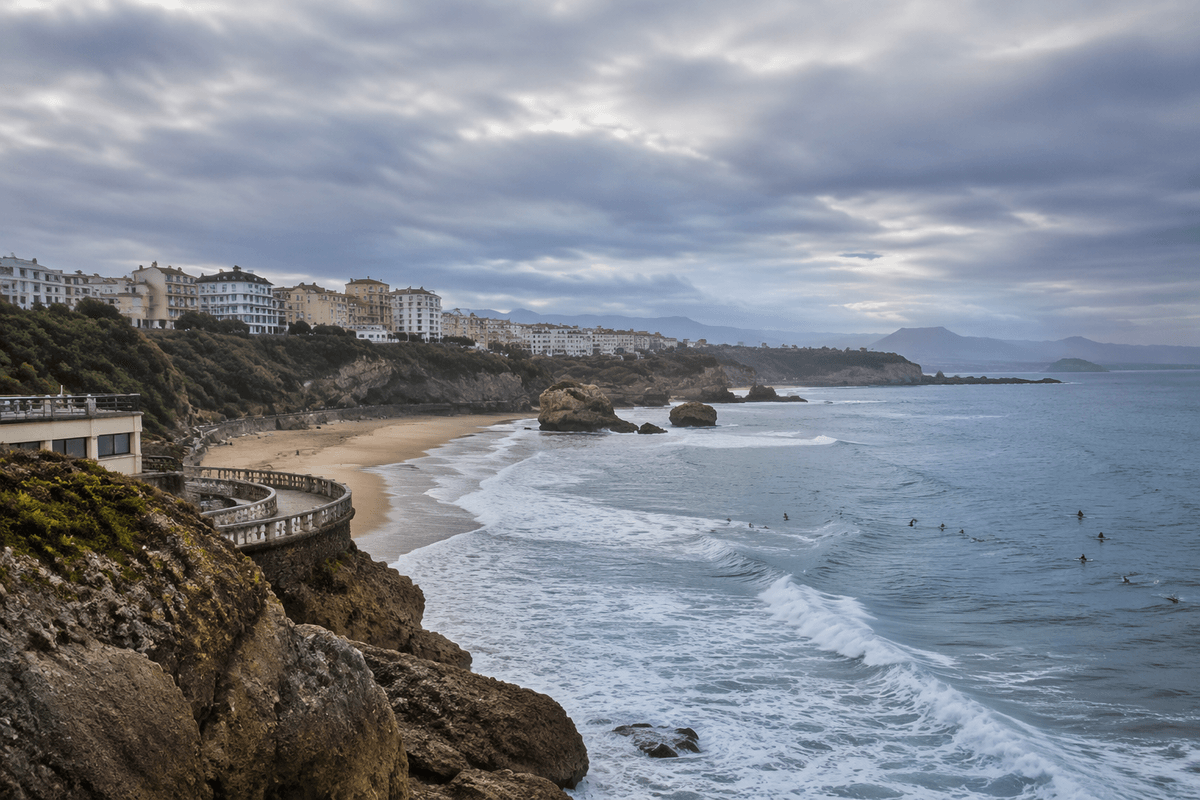
We had one of those “is it really summer?” mornings where the sky looked like brushed steel, and it made the timing question feel less theoretical. Biarritz isn’t the Côte d’Azur: you don’t come for guaranteed blue-sky beach days, you come for a place that still feels good when the weather is moody. If you’re choosing purely for sun reliability, Nice will win more often; if you’re choosing for atmosphere and movement—surfers, cliff walks, markets that don’t feel like a set—Biarritz earns its keep.
For most couples, late May to June and September are the sweet spots: warm enough to swim on good days, but without the July–August crush that turns simple decisions (a table, a towel spot, a taxi) into small negotiations. High summer brings the liveliest surf-town buzz, but you’ll pay for it in accommodation and queues, and the beaches can feel more like a stadium than a pause button.
Surf-wise, summer is friendlier for beginners—more manageable waves and a lighter wetsuit situation—while autumn tends to bring bigger swells that look incredible from the cliffs but can be too much if you’re learning. Winter has a raw, cinematic edge, yet it’s a gamble for a 4–6 day break unless you genuinely enjoy building plans around wind and rain windows.
Where to stay and how to get around easily
We nearly booked right on the Grande Plage because it’s the obvious “holiday postcard” move—then remembered that obvious can mean noisy. Staying central makes mornings easy and lets you drift home between swims and apéritifs, but you’ll hear the town late and you’ll feel peak-season pricing most sharply. If you want Biarritz to lean more surf-town than resort, aim a little south toward Côte des Basques or around Les Halles: you trade a few uphill walks for better food access and a vibe that doesn’t depend on the seafront being sunny.
Getting around is mostly a relief: Biarritz is genuinely walkable for a 4–6 day break, and that matters when the weather flickers and you don’t want to “commit” to a big transit plan. The catch is the topography—those short distances can still feel leggy after a surf lesson, especially if your place sits above the beaches.
We’d only hire a car if you’re planning multiple day trips (Espelette, inland villages, or hopping down to Saint-Jean-de-Luz) because parking in Biarritz itself can turn a simple dinner into a circling exercise. Otherwise, lean on buses/taxis for the occasional save, and keep your base simple: one neighbourhood you like, and everything else becomes an easy loop rather than a daily logistical project.
Is Biarritz right for you? A simple decision wrap-up
I kept asking myself the Nice question every time the wind picked up: am I here for guaranteed beach weather, or for a town that still has texture when the sky turns? If you want polished promenades, easy sand time, and evenings that feel effortless, the Côte d’Azur will frustrate you less.
Choose Biarritz if you’ll actually use the variety: a surf session or cliff walk when it’s bright, a food-led afternoon when it isn’t, and a base you can handle mostly on foot. It asks a bit more of you—hill legs, tide awareness, and a willingness to eat early in peak season.
Decision cue: if you’re planning 4–6 days and you’d rather “live somewhere” than just lie somewhere, Biarritz is the better bet.


![Revolut <18 vs. GoHenry [Which Card is Better?]](static/image/2026/07/27/c4c57026-ec22-4205-ab23-bb45d5fbc986.png)